How do these two things go together? Well, it all started with a wealthy English man, Colonel William Hall-Walker, who had a stud farm in Tully, just outside Kildare. In 1906 he arranged for a famous Japanese garden builder to come to his stud farm and build a garden. It was completed in 1910. The colonel evidently saw the writing on the wall, and left Ireland in 1915, one year before the revolution. He gave his stud farm and gardens to Britain, and the farm became the British National Stud.
The garden fell into obscurity until the farm was returned to the Irish Government and became the Irish National Stud in 1943. The garden got a horticultural supervisor in 1946 and has been lovingly maintained ever since. The garden is designed as a representation of the path of life, from the soul’s beginning in oblivion to its eventual passing into eternity.
We were there on a mostly sunny day and the light filtered through the dense screens of multicolored foliage. The garden’s design is intricate, and the signage whimsical. The plantings are sometimes wild, sometimes carefully manicured. There are ingeniously designed changes of elevation that take you up small rocky hills and down through dark grottos. Water is integrated throughout and on this day provided us with opportunities for reflection.
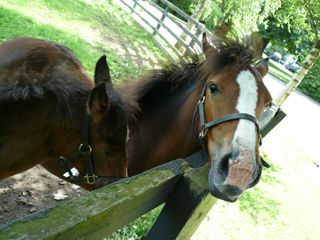 We actually saw a couple of horses, too. We learned from white tags on their bridles that one was called Patience and the other Smiley. They were very small. We couldn’t tell if they were young, or just small. Actually, one was surely young, but the other one didn’t seem so young – just small. So, that’s about as much ignorance about horses as I could fit into two sentences. I’m pretty sure they weren’t studs either. Evidently we were seeing the Irish National Colts, or the Irish National Pre-Studs. Or maybe they were mares, because who would call a stud of any variety Patience?

Another point of excitement: Mark found an Arizona Iced Tea in the café. Woo-hoo!

Leave a Reply