 We're all going to be communicating more on video, and as storytellers we will be asked to video-record stories for use in a range of contexts. I've been researching and experimenting and here are some tips and best practices I've learned for recording your stories:
- Lighting: Try to use natural light that illuminates your face fully, but doesn't wash you out or leave you over exposed. If you are using artificial light, make sure it is in front of you, not behind you. And as with natural light make sure your face is bright but not overexposed, and that it doesn't leave one side of your face with shadow. This is accomplished by placing the light at the correct distance and angle. Many people recommend using a ring light, and there are lots of these available at a wide range of prices. Check out Angie's video on how to look good on zoom calls. Her advice applies to recording, too.
- Camera position: Get the camera at your eye level or slightly above by adjusting your chair, or raising or lowering your computer (tripod, stack of books). It's not enough to just angle the camera.You want it pointing pretty much directly at your eyes on a horizontal axis. Looking directly at the camera makes it seem like you are looking at the listener. This gets easier with just a little practice.
- Body Position: Mostly fill the frame with your shoulders and head, with the top of your head just below the top of the frame. Record yourself and watch how your gestures are working with the framing you've chosen. You may need to show more of your body so the gestures are consistently in the frame. Or practice them so that they are effective in the closer angle. Look how brilliantly Bill Irwin does this, as well as how he uses his face and timing in this video.
- Video quality: Record with the best quality that you have at your disposal. For example, the webcam on my desktop is sufficient for our zoom meetings, but the camera included in my iPad is much better for recording. Play around with your devices to find which one is best.
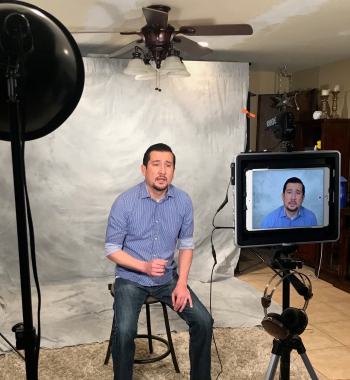
- Background: Go for simple or something intentional/artistic and not too busy. Try not to have your bed or your kitchen or doors or windows behind you. Avoid glass in frames that will reflect the light back at the camera. The photo at the top shows Travis in his home studio. This is the kind of set-up that is most often seen in professional contexts. As artists, we may have more flexibility with what we have behind us. Bottom line: think about what best serves your listeners' ability to focus on the story you are telling.
- Clothing: Go for solid colors that complement you. Some sites say to avoid white, but it depends on your skin tone, the lighting, and the background.
- Makeup: There are hundreds of makeup tutorials online about how to look good on video for both men and women. It's a deep and potentially expensive rabbit hole, but I've found that some simple tweaks to my makeup can make a noticeable difference in how the video looks. Even if you don't regularly wear makeup, analyze how you look on video and decide if you want or need to use some. This is especially important if you are creating a product for a professional application.
- Story: Be completely confident in your story so you can relax in front of the camera. There are so many other things to manage; you don't want to be worrying about that, too. Video done this way with the emphasis on the face is very intimate, like telling a story to a friend over a cup of coffee. Bring all your storytelling gifts and skills to bear, while also shooting for a relaxed and conversational vibe.
- Practice and Experiment: Play with what works best for you as an artist, and with your style and repertoire. Experimenting helps you get more comfortable using the camera and will result in a quality product that is engaging for listeners and accurately represents you as a storyteller. As with most things we want to get good at, it just takes time.
- Ask for feedback: Ask your friends and trusted allies for feedback. Record something and share it. Ask specifically for what you want to know about, or for anything they particularly liked, or if something pulled them out of the story or distracted them.
- Perfection is not the goal: As with in-person storytelling, effective engagement is the goal – not perfection. Record your story and watch it. If you can enjoy it yourself and take some joy in it, go ahead and use it. For example, I recorded this story for Doug Bland's Earth Day project. I shouldn't have worn a patterned shirt and I feel like I was too close to the camera, and the background is busy. But at the same time I made my own self laugh when I watched it, so I went ahead and sent it to him.
Go forth and make content! This is the time for all of us to up our skills and get proficient telling stories in this way.

Leave a Reply