I have almost completed the Storytelling certificate program here at SMCC. I came to it indirectly, through a dear friend, never intending to stay and become a storyteller. But here I am, two years later—a storyteller. It has been a journey far deeper and richer than merely learning the skills necessary to craft a story and tell it to an audience. It has been a journey through time.
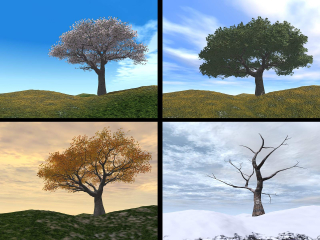
I read recently that our current concepts around time only date from about 1500. That’s when the people formerly known as serfs began moving into cities in large numbers. Before that time, they lived an agricultural existence, in which time moved in seasonal cycles, with times of intense labor balanced by times of relative leisure; a time in which every person performed many different jobs, which although tedious, at least varied throughout the year. This was the time of traditional storytelling too, when families and communities told tales from their past and their present, building strength for the future.
Time back then wasn’t “spent,” it was “passed.” You passed the time, as though it were a feature of the landscape which you could hurry by or linger and appreciate. Or, in another idiom, time itself passed, like a river flowing by you, whether fast or slow. You stood on time’s bank and contemplated. This was “once upon a time.”
Then came urbanization. People traded their seasonal cycles and passing time for wages. Now time had to be measured—the first clocks came into being, placed on towers so they could rule over urban lives and work. Time was carved up into hours.
This has changed everything. The metaphor governing our language about time now is “Time is Money.” We can spend, waste, or save time. Spending time is good. Wasting it, meaning not using it to make money, is bad. And saving it means either doing things faster or doing many things at once. All to save time for…what?
Ideally, for passing it in liberating and restorative ways. In allowing ourselves to contemplate time as it passes, our lives as we pass through them. In meeting, truly meeting, the others with whom we are sharing this time, and finding out about their journeys. In short, for sharing our stories.
And so, I discovered in storytelling a different way to relate to time, to others, to myself. To be a storyteller is to be both teller and listener—a fellow traveler from the now into the past or future. It is to escape our mechanized and materialistic approach to our lives and reenchant them. It is to return to the “once upon a time.”
(The image at the top can be found here.)

Leave a Reply