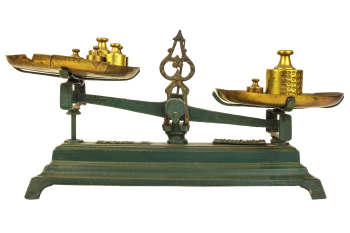
I’m writing this just as we’re entering the astrological sign of Libra, symbolized by a set of scales. This is fitting, since I’ve been crafting personal stories lately, which raises the notion of how to balance the facts I remember with the need to craft a compelling story. Until last week I thought the main problem was just what facts I could alter, and in what ways, before I crossed that fuzzy ethical boundary between a “true story” and “fiction.” I thought that boundary existed between me and my audience, and of course it does. But I found out it runs even deeper than that
A few weeks ago I came across a passage from a book called You Don’t Have to Be Famous, by Steve Zousmer, a book about memoir writing. He tells of writing a story about his grandfather for his first creative writing class. In order to make it a good story he changed details and ending. And he did make a good story. It got published. But he tells us that he paid a severe and unexpected price: his memory of his actual grandfather and the actual events became forever and inextricably intertwined with his fictional account, so that he could no longer distinguish one from the other. He concludes by warning other writers not to make his mistake, not to sacrifice the accurate, literal truth for the sake of a better story.
This deepened the issue, from one of public integrity to one of personal, spiritual integrity. I had never thought about the possibility of changing my own internal past by changing the way I told things to others, even though I’d read about recent research on memory that said our memories aren’t recordings of facts but reconstructed narratives based on isolated snippets of recalled moments. In short, I’d never thought of myself as my first, last and most enduring audience.
In addition, I began to think of my obligation to the larger audience that included those in my past. If the way they are to be remembered by those to whom I tell their stories rests in my hands, how can I rise to such awesome responsibility? For in the end, everyone who lives on lives on only in story.
I began a new, deeper soul-searching that for a while had me paralyzed. I have felt the deep power of storytelling, and revel in its creation. But how do we balance the scales between telling “just the facts,” Dragnet-style, and compelling personal narratives that reveal universal Truths? In other words, how do we balance the “truth” with the “Truth”?
I’m fairly certain that there’s no “one size fits all” answer to this. But perhaps the answer is created anew every time one of us delves within and begins to craft a story. For it’s then that we can examine the “facts” of what we remember while also examining the “self” that remembers. It’s then that we can do our best to fact-check with others who were there, and with contemporary sources. It’s then that we can carefully put fact and meaning on the pans of the scale and balance them with our sense of what’s right—for us, for the audience, for the occasion, and for those within the story. It’s then that we curate both our own spirit and the collective human spirit, carefully preserving both the truth and the Truth. Truly a cosmic balancing act.

Leave a Reply