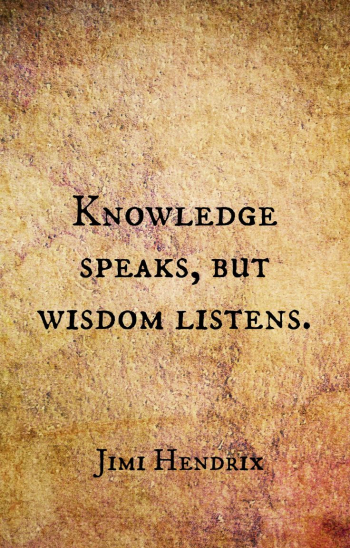
 As children, we are all full of curiosity. We hunger to know what the world is about, and what we are about. I was no different. Growing up as an only child in the 1960’s, I aimed my share of incessant “Why’s” at my parents to learn about the world. They were very patient too, giving me all the facts I could handle, slaking my thirst for knowledge. As for learning about myself, that seemed not to be reducible to the quick facts of knowledge. No, that wasn’t knowledge, but wisdom. That needed answers in the form of what my parents called stories. And again, they were generous with them.
My parents read to me nightly until by age four I could read for myself, and started the voracious reading I continue to this day. I remember reading Dr. Seuss, the Brothers Grimm, the Childcraft encyclopedia, biographies of famous people–anything I could get my hands on. Then there were the oral stories: recited nursery rhymes, Bible tales in Sunday school, family legends on holidays. And of course there were movies, but only in movie theaters and drive-ins back in the 60’s. Finally, there was the defining storytelling technology of the Boomer generation: television, with its endless stream of 30- and 60-minute tales. So I swam in stories, basked in stories, became compulsive in my search for wisdom in stories
But as I grew, I found that what I was searching for kept eluding me. I wanted something definitive, something that would settle all my questions about life and tell me once and for all how I should live. A pull began, between my need for uncertain wisdom and definitive knowledge, between fiction and fact. I chose fact.
I began to judge stories by the knowledge they could give me, rather than by what wisdom they might contain. Aided and abetted by school’s emphasis on education as memorizing facts, I came to think of reading fiction as “false,” a “waste of time,” and became a firm non-fiction reader, which I remained throughout my youth and into adulthood.
Luckily though, when I was hired to teach English as a Second Language at a community college, I was also given the opportunity to teach the Humanities and Mythology. These classes required me to jump once again into fiction, and to begin dealing with truths not expressed as facts. Of course, I resisted, deep as I was in my “non-fiction equals knowledge equals wisdom” worldview. But try as I might I could never come to believe that any “factual” theory completely or definitively explained any myth or exhausted any poem. There was always an ineffable mystery hanging around them, like the mists over Avalon. I came to suspect that that was where the wisdom resided.
A statement by a literary scholar and mentor early in my career confused me at the time, but has stuck with me. He told me,
“If you want knowledge, read non-fiction; if you want wisdom, read fiction.”
Now, after many years, I believe I understand what he meant.
Non-fiction puts the onus of communicating its knowledge or wisdom squarely on the writer. If the readers fail to understand, it’s the writer’s fault for not making things clear enough. Fiction, on the other hand, gives the listener a more active role. If you don’t understand, maybe you need to listen better, or listen differently. And learning to listen differently is transformative. It changes you, the way you see the world, the way you are in the world.
This magic of transformation is what I now know originally drew me to stories. It’s drawing me again, as I return to reading, writing, and telling them. . The wisdom is there, in the story, the teller, the audience and the telling. We’re all a part of creating it. I’m learning how to listen better, and be in the world differently. It is transforming me. It can transform the world.

Leave a Reply