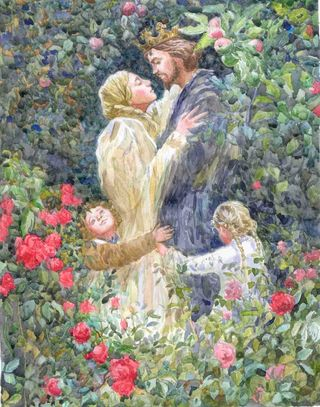
 My fairy tale for this semester is Rapunzel. Rapunzel is a story of maturation for young women and especially for all of the feminine roles that women play in their lifetime. The tale type is 310, the maiden in the tower, and it falls within the large category of supernatural opponents and in the narrower tale type of opponents defeated. (Well that’s a relief we know from the beginning that Rapunzel will defeat the wicked witch.) There are 91 different variants that have been collected and published and each of them changes the tale slightly. The earliest variations have stronger and more resourceful women who managed to get themselves into and out of trouble. The later versions and especially the Grimm Brothers’ version have changed Rapunzel to depict a more demure maiden more in line with the genteel refined ladies of the French salons…a young maiden who must be protected and rescued by a strong and handsome Prince.
The characters in the fairytale speak to many of the roles that a woman had to learn in a lifetime. The story begins with Rapunzel’s mother craving the rampion that was growing in the neighbor’s yard. Her young husband was willing to climb over the fence and steal what his wife craved and to give the child away without considering the consequences of his choice. Many young husbands deal with the fear of displeasing their wives and losing her. “Happy wife happy life” is considered sage advice by many young men but as the story shows that isn’t always the happiest life.
As we follow along in the story, the wicked witch who takes the infant Rapunzel loves her and cares for her like a mother, a surprising twist from the wicked witch of many stories. Young Rapunzel flourishes and grows up to be a fair and beautiful young maiden. As Rapunzel began to mature into a young woman, the wicked witch faces the dilemma of allowing more freedom for the young teenager. Many mothers try to hang on to young women and keep them young as long as possible. Psychoanalysts may say that the mother is jealous of the younger woman and wanting to avoid competition with her daughter. Others would say she was overly protective. Either way by locking Rapunzel in the tower (and yes that is a phallic symbol) she did not stop the maturation of her daughter. In the older variants Rapunzel is pregnant when she leaves the tower and delivers her children in the desert. In the Grimm’s variant she simply banished from the tower and the children are not explained. This sanitizing was a part of the Grimm’s adapting a worldview of women as less knowledgeable and less able to manage their lives.(Sweet young thing needs a man to care for her.) In the older variant Rapunzel conspires with the Prince to escape from the tower and with the assistance of magical objects they escape from the witch and run off to the prince’s kingdom where they
live happily ever after. In the older variant she is resourceful and takes her life into her own hands.
One of the good things about fairytales is that they allow us to look at life situations from several different points of view without the consequences of living through the situation. We get to try on a role to understand the fears and choices that come with that role. I believe that Rapunzel is a story for adult women and helps them see the pitfalls of being of a selfish and demanding wife, an overly protective mother and rebellious teen. Maturation comes about when we face our fears and overcome them. And yes Rapunzel did, in the end, live happily ever after but it was a winding road to get there.

Leave a Reply