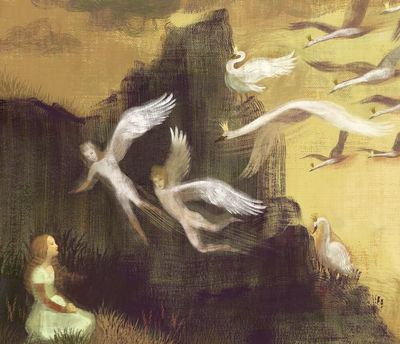
 I was not at all familiar with the tale of the Wild Swans until became
my focus for the Fall Semester in Multicultural Folktales II. As I read
through the different variants of the tale what interested me was the different
motifs that each variant uses: swans in one story, ravens in another, different
numbers, different family dynamics, witches in some, evil parents in others.
Even the presence of death and punishment changes from culture to
culture. Why did one particular culture see fit to involve shirts in the
story? Why did one cultural tradition
produce a story where the witch was allowed to live and another had her die?
History is defined not only as the factual happenings of the
past, but also as the chronology of stories surrounding a culture or people. That might include the order of when things
happened, who the players were and how the culture dealt with issues of
morality, law, religion and values. This is where story becomes an
important part of history. Artifacts will only tell so much, but the
stories that come out of a culture shed light upon its history.
It is exciting to see how folktales can help interpret the past
and shape historical understanding.
The image at the top of the post can be found here: http://cizgilimasallar.blogspot.com/2011/12/anna-and-elena-balbusso-les-cygnes.html


Leave a Reply