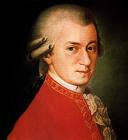
In researching Wolfgang Amadeus Mozart
for a biographical story, I learned much about his relationship with his
father, his struggle to marry the woman he loved, and his experiences in the
music world, but what I decided to base my story on was his name. I learned that he was christened “Johannus
Chrisostomus Wolfgangus Theophilus Mozart.”
The first two names were for St. John Chrisostom whose feast day was
January 27, the day Mozart was born in 1756.
“Wolfgang” was his mother’s father’s name, and “Theophilus” means
“beloved of God” in Greek. He was so
small and fragile, and it was the coldest part of winter in Salzburg, Austria.
His parents feared he might not survive.
In giving him the name “Theophilus” they were hoping to give him added
protection.
So where did “Amadeus” come from? I had always read and heard “Wolfgang Amadeus
Mozart” in books, on CDs, on music.
There was even a popular movie entitled “Amadeus.” I found out that Mozart liked to play with
his name as he was growing up, and that by the time he was an adult, he had
settled on the Latin version of “Theophilus” – “Amadi” – for his middle
name. He signed his musical scores “W.A.
Mozart” and liked to be called “Amadi.” When
he died, the man who brought his body to the church for burial wrote on the
death certificate “Wolfgang Amadeus Mozart.”
“Amadeus” is the Italian version of “Amadi.” Eight years later a book of “The Complete
Works of Wolfgang Amadeus Mozart” was published, and since then that is how he
is known.
I can just imagine Mozart railing from
from heaven, “That’s not my name!” every time he hears someone call him “Amadeus.” I know I have always wanted to shout “That’s
not my name!” to people who call me “Lynn.”
When I tell this story, I open by
shouting “That’s not my name!” to pique my listeners’ curiosity. I make the connection to my feelings about my
name and how I think Mozart must feel about his name. At the conclusion of my story, I point out
that even if you may get people to call you what you like while you’re alive,
you never know what you will be known by after you’ve passed on.
When crafting a biographical story, keep
in mind the rules for crafting any fact-based story. Below is an adaptation to Donald Davis’s
rubric of the Five Ps. Donald says that
to create a Picture in your listener’s mind, you have to tell the People,
Place, Problem, and Progress. My version
starts with something to capture attention:
•
Pique
the listeners’ curiosity
•
Establish the People and Place
•
Present a Problem
(you don’t have a “story” if you don’t a have problem)
•
Show the Progress
of the Problem (sometimes this is a solution; sometimes a reconciliation)
•
Make your Point
in telling the story
Note that it’s not possible, or
relevant, to include all the facts of a person’s life. You just want to focus on one problem that
leads you to a point.

Leave a Reply