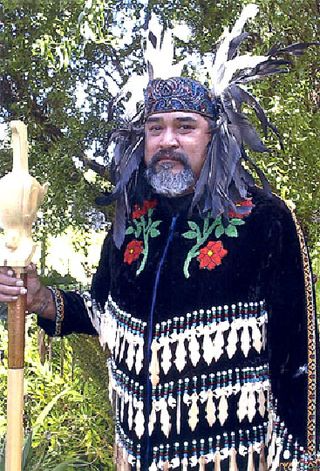
 One of the last times I heard my relative Sobiyax (Bruce Miller) tell a story was at a conference in Las Vegas. He was in a wheelchair and looked frail. I still thought of him as being so large and strong. He had once punched out a horse. He broke his hand. When our van was blocked by a car that had parked too close, he managed to push it so hard, it tipped enough for us to back out. Diabetes had taken away one of his legs; a stroke would take his life a few months later. At the conference, Sobiyax told the Twana story of “Why Blue Jay Hops.”
Long ago, long before the coming of the Great Flood, Blue Jay was hungry. He was excited to hear Bear inviting people to his Longhouse for a feast.
The food was placed in the proper ceremonial way, but there was no oil. Now in those days, one would dip one’s food in oil, much the way today you might spread butter on your bread, or put dressing on your salad.
When the people saw there was no oil, they started to mutter, “Why Bear doesn’t even know how to give a feast!”
Another commented, “No Oil! How Rude. We should just go home.”
Bear heard what they said, and laughed. “You want oil?” he called out. “I’ll give you oil!” And he danced out to the middle of his Longhouse where the fire was burning and the salmon was roasting.
He sang his Song and as he sang he rubbed his hands together. Now bears have a lot of fat underneath their skin, and the heat of the fire started to make the fat melt, and it dripped out in the form of oil. This was caught by his relatives in a large wooden bowl and passed around to his guests.
Someone was watching this and that someone was Blue Jay. He envied the Power and magic of Bear. Before the people left, Blue Jay called out, saying, “Next full moon, I invite all of you to my Longhouse for a feast!”
The following moon, the people gathered at the home of Blue Jay. Once again, they were shocked to see there was no oil.
“Blue Jay doesn’t even know how to give a feast!”
“How rude! No oil! We should just go home.”
Blue Jay laughed and shouted, “You want oil? I’ll give you oil!” And he danced out to the middle of his Longhouse, where the fire was burning. He sang the Song of Bear, and began to rub his hands – really his feet – together over the fire in the manner of Bear.
Now our Old People teach us that everyone has a Song. Part becoming an adult is learning what your Song is, so you can become all that you can be. A Song can be given; a Song can be shared. But a Song must never be stolen.
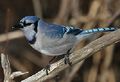 Someone was watching. And that someone was the Creator. The Creator was so angry, He made the fire jump up and it burned Blue Jay’s feet. And that’s why even today when you see a Blue Jay, his feet are dark and twisted, as though they’ve been burned in a fire.
A Blue Jay can’t walk like a normal bird. He can only hop. Even today, Old People will say, “He hops like a Jay,” which means the person they’re talking about is a thief.
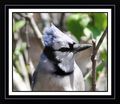 The Trickster best known to non-Natives is Coyote, but if you continue further up in the Pacific Northwest, Native people will tell Raven stories that sound very similar to those of Coyote. Among some of the Native communities in between, the stories will focus on Blue Jay, and the Winter Spirit Dances are sometimes called Blue Jay Dances. In one story, Blue Jay rescues light, but in doing so, a door slams shut on his poor head, resulting in its odd flattened shape.
A resource I would suggest, not only for Native American material, is the NPR program, Sound & Spirit. Fantasy writer Ellen Kushner is the host and co-producer, and the program frequently features mythological themes. Click here and then scroll down through the archived programs to discover a terrific show on Tricksters, as well as one on Native Americans, and yet another on Storytelling.
If you are looking for some written Native American resources, you might try a curriculum created for the U.S. National Park Service. In a number of Parks, staff will do “interpretive” work interacting with visitors, particularly children.
And finally—you might enjoy reading the words of Sobiyax, discussing ecology and the story of trees.
 If you still haven’t gotten your fill of Native American Stories, you can click on to my blog. This is a site where I get to play with traditional stories, foods, and culture.
(First blue bird image courtesy of v4vodka, second courtesy of vidterry)


Leave a Reply