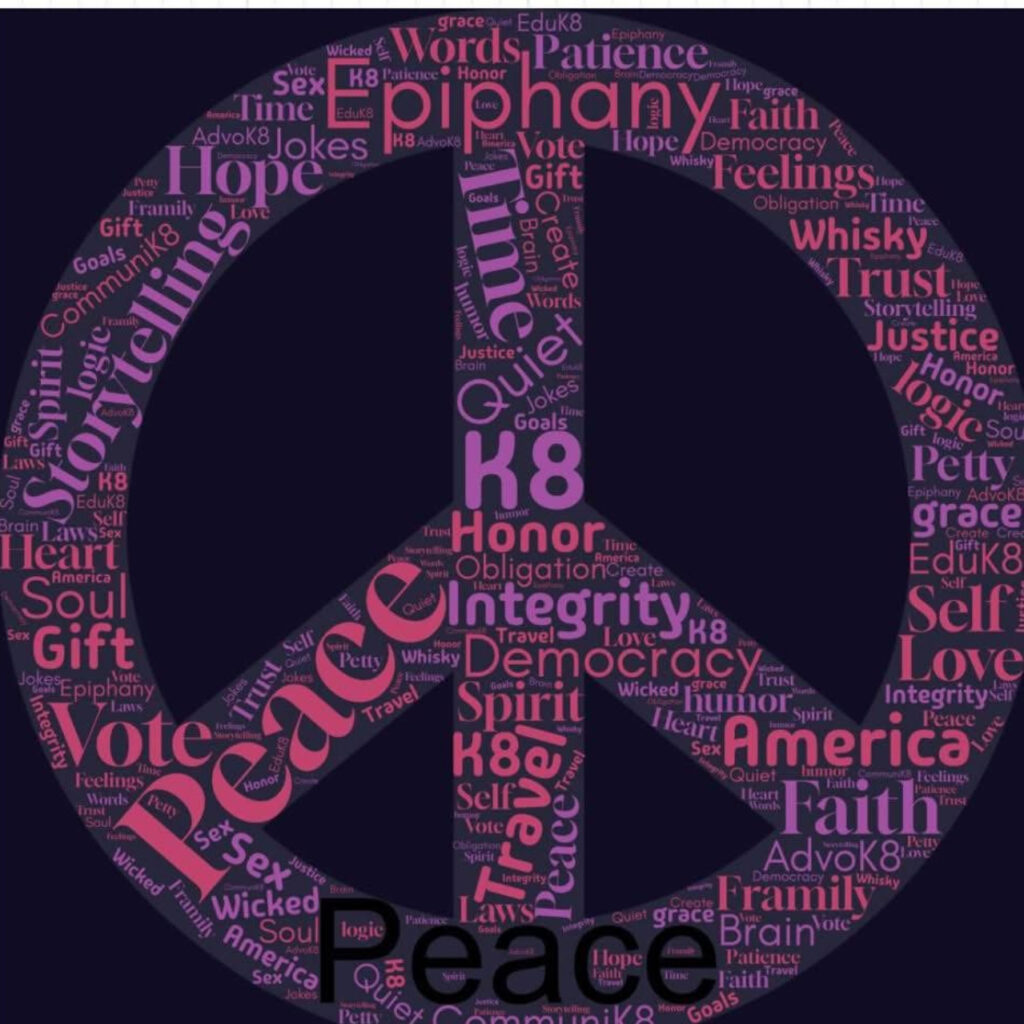
I’ve been telling! Lies. Stories. Fables. Myths. And the occasional cautionary tale. [i]
I’ve told stories on stage for over ten years, but I hadn’t received any formal training. I’m a lawyer – we craft narratives. I’ve done veteran advocacy and spoken with members of Congress and held press conferences. Along the way, I’ve had some coaching for particular stories, or venues. In January 2025, I took an Introduction to Storytelling class on a whim. I wanted to get out of the house, meet new people, learn a little bit, and maybe learn some techniques to improve my stories. After a summer break, I was induced to take another course at South Mountain Community College. This course was focused on telling personal stories. Little did I know that these courses would improve my mental health.
Storytelling has three parts. There is the story. There is the teller – me. There is the audience. They are intertwined. A story and a teller without an audience is just me talking to myself. That’s a lot crazy. A storyteller with an audience, but no story, is very boring. And, not exactly normal. A story in my head might just be a hallucination, or a dream. I must craft it and tell it. With an audience it has power. Power to entertain. Power to persuade. Power to change. And all parts have a responsibility. The personal story must be true. The storyteller must be open and honest and authentic. And the audience should be open to listening. When this happens, it’s almost magical. Stories that touch part of your soul will linger with you.
During both semesters, we’ve used the concept of Affirmative Coaching to provide feedback. To do this, we recenter our thoughts on our classmate. Per the TikTok trend, “We listen but we don’t judge.” We focus on what we liked about the story or the teller. Or how the teller or story impacted us. We’re in a trust relationship. Throughout this semester, because we’re telling personal stories, we’re vulnerable. Last semester, there was stage fright and the nerves of public speaking. Now, instead of picturing the audience in their underwear to calm your nerves, it’s as if we are laying it all out there, nakedly but unafraid. We’ve told raw stories – intense, emotional, revealing, and genuine. We’ve demonstrated care for each other through our feedback, and it’s sparked many a conversation after class.
I’ve told the story about how I was held at gunpoint by police, and about the birth of my child, and about my own misbehavior in high school. I’ve heard stories about other people’s traumas, and fears, and failures. Both telling my stories and listening to others has been therapeutic. The connections demonstrate that we’re not alone in this world. Using narrative, or images, have helped me process many emotions. I tried a different structure for one story which helped my process my trauma differently. We’ve created a safe space for each other. I’m more aware of self. I’m even more resilient.
So, I’ve left my house, met some amazing people, and learned some techniques to improve my skills.
[i] Kathryn L. (Kate or K8) Smith is first and foremost a Black woman, and the daughter and descendant of Black women. This informs her stories. She is an Air Force veteran and is “a different kind of lawyer” because she attended the Notre Dame Law School. She’s a mom of a grown and flown adult daughter. Her personal mission is to AdvoK8, EduK8 and CommuniK8. You can find her (or a version of her) on Facebook, LinkedIn (kathrynlsmithk8), X (@awesome_K8L), and Instagram (@awesome_kate).


Leave a Reply