As part of the Storytelling Institute, there is a class called Creating and Telling Personal Stories (STO 297). In this class, you learn how to structure stories from your personal life. There’s something really evocative about getting a glimpse into someone’s life—into a moment in time, the people who were there, the place where it happened, the problem that was encountered, and the progress and resolution that followed. We also may come to understand what the teller learned through the process of living those experiences.
A challenge with personal stories is that listeners sometimes feel disconnected. They might think, “That happened to you, but I’m different, so it wouldn’t happen to me.” This can make the story less meaningful for others.
One day in class, someone shared a “String of Pearls” series of stories about identity, especially about accepting themselves as a Storyteller. They shared two stories about being called upon to tell stories in a public space. Many of us could relate to the challenge of embracing the title of “Storyteller” and what it means. Since several of us knew and liked the storyteller, the stories felt even more engaging. The third story they told was a folktale.
The folktale was about animals, focusing on one animal learning to accept its own greatness. Folktales are powerful because they talk about what it means to be human without focusing on details like identity, gender, or appearance. These stories feel ancient and speak to universal human experiences.
As I listened, I realized that pairing the folktale with the personal stories gave the personal stories a kind of gravitas they would not have had on their own. Hearing the folktale right after the personal narrative made the message about self-acceptance and embracing one’s identity feel much more universal. The personal experience became something everyone could connect to, and the folktale created a bridge that transformed an individual experience into a shared human truth.
This suggests an interesting storytelling technique: pairing personal stories with folktales. You could tell the folktale first, followed by the personal story, or vice versa. Either way, this approach helps ensure that personal stories resonate more broadly. Because folktales speak to the nature of human existence, they connect with all people.
To try this technique yourself, here is a simple, step-by-step approach:
- Choose a personal story you want to share, focusing on a clear theme or lesson, such as overcoming self-doubt, finding your voice, or learning from mistakes.
- Identify the core message or emotion in your personal story. Ask yourself, “What universal idea does this experience reflect?”
- Select a folktale, wisdom story, myth, or legens that expresses a similar theme. You can search for traditional stories from different cultures that highlight the lesson you want to convey. For folktales, be to visit Ashliman’s Folklore and Mythology Electronic Texts
- Decide how to pair them: present the personal story first to set up your specific experience, followed by the folktale to highlight the universal aspect; or start with the folktale to introduce broader human truths and then share your personal story as an example.
- Practice telling both stories together, making sure to clearly connect the folktale’s message to your personal experience. This helps listeners see how your individual journey relates to a shared human truth.
By following these steps, you can help your audience connect with and remember the deeper meaning in your stories.
I share this idea for us to consider as storytellers who want to create connections. As we grow in our storytelling, we’ll have chances to try this pairing technique—choosing personal stories and folktales, combining them, and sharing the results with our listeners. By using both types of stories, you can help your storytelling reach more people and have a bigger impact. When we tell stories that welcome everyone, we help create a better experience for all.
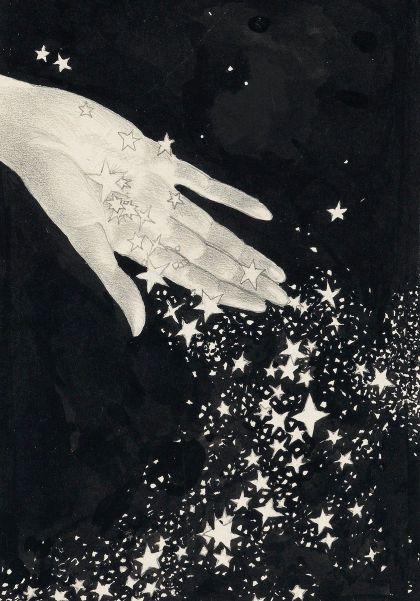
The image at the top of the post is “Hand to Stars” by Willy Pogany.
Amy MacPherson is a storyteller whose work blends memory, imagination, and lived experience to create vivid, transformative narratives. Her performances invite laughter, reflection, and connection, reminding audiences of the power and dignity of every voice. Through story, she seeks to build circles of belonging that outlast the telling.
Leave a Reply