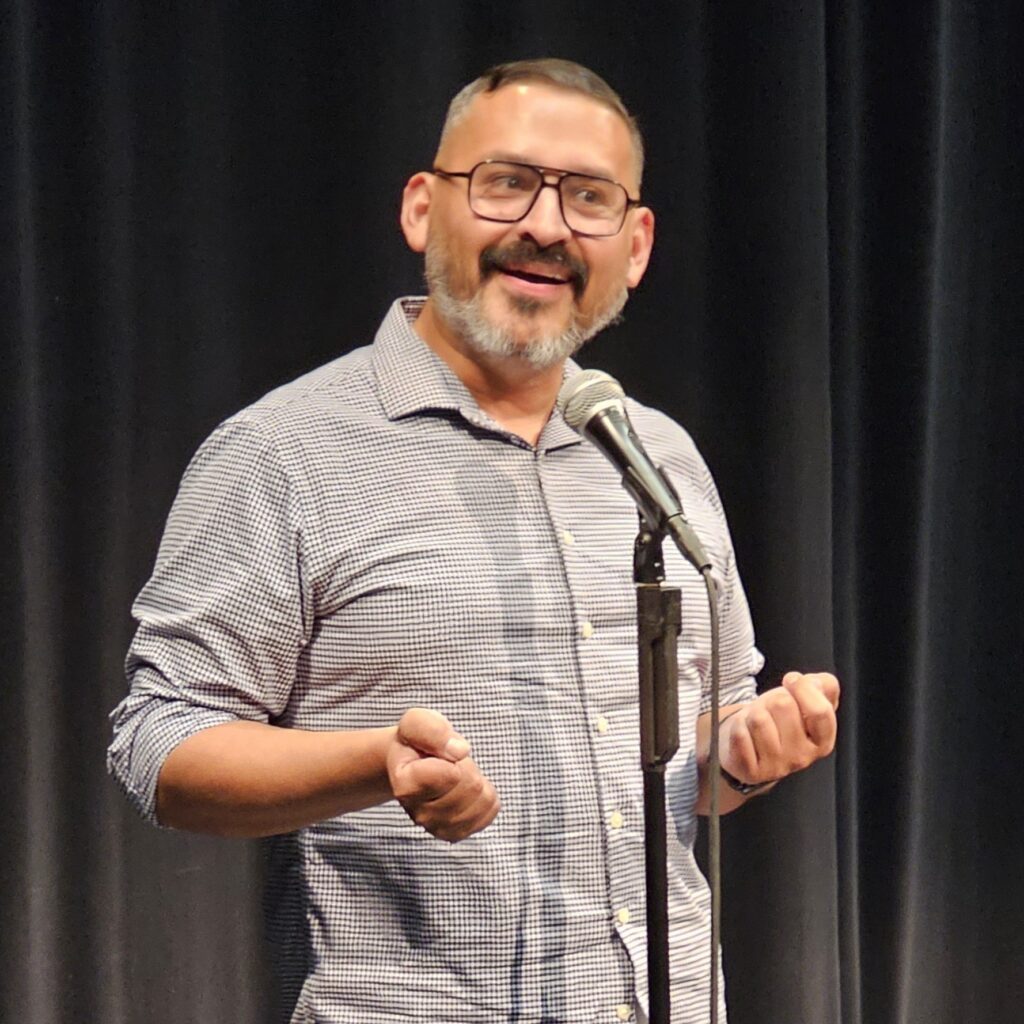
I’ve been doing stand up comedy for 13 years. About three years into my comedy journey, I discovered storytelling completely by accident. I found the class while flipping through a course catalogue while picking up a friend from Phoenix College. A class called The Art of Storytelling caught my eye. It sounded fun, so I signed up. At the time, I was a setup, punchline style comedian. Quick jokes. Tight structure. Get to the laugh fast. After taking the class, I realized storytelling could actually make my comedy better. It helped me connect with audiences more and sneak deeper meaning into my act (oh the trickery).
Recently, someone asked me what the difference was between stand-up comedy and storytelling. Honestly, I didn’t have a good answer. I’ve been doing both for years without really stopping to think about it. But the more I sat with the question, the more I realized they really are two different art forms, even if they cross paths sometimes.
Telling a story at a storytelling show feels very different than performing a comedy set at a comedy club. In a stand-up comedy show audiences expect laughs constantly. One metric comedians throw around is getting four to six laughs per minute. Especially in shorter sets, there is pressure to keep the energy moving. Bombing as a comedian (oh it happens) teaches you to fear silence a little. If the room gets too quiet for too long, your brain immediately starts going, “Where’s the nearest exit, and should I run?”
Storytelling changed the way I thought about holding an audience’s attention. I remember the first time I let a pause sit during a story instead of rushing to the next joke. In comedy clubs, silence usually feels dangerous. But this time, the audience leaned in instead of pulling away. The pause actually made the punchline hit harder. Honestly, that feeling still happens sometimes and it feels so good. Like, yes, I have them hooked and they are here for the ride.
Some performers naturally blend the two forms. Storytellers like Adam Wade or the late Jeanne Robertson use humor throughout their stories. Then there are comedians like Kathleen Madigan or Mike Birbiglia who build long stories into their stand-up sets.
In my own stand-up, I blend the two. I usually start with quick rapid-fire jokes to build trust with the audience. Once they’re with me, those jokes usually lead into a longer story with jokes peppered throughout and a bigger payoff at the end.
When I perform at storytelling shows, my goals shift a little. In stand up, I’m chasing laughs. Storytelling feels different. I’m more focused on taking the audience somewhere emotionally. Sometimes the story still gets laughs, but sometimes it goes somewhere more emotional too. And yes, I’ve totally cried on stage before.
I also think modern comedy specials blur the line between stand-up comedy and storytelling. A lot of comedians build entire specials around long stories, which can make the two art forms look very similar. But most comedians do not start with a Netflix special. They start with five-minute sets at open mics where there is very little room for slow pacing. Both build connection, just in different ways. Comedy taught me rhythm, timing, and structure. Storytelling taught me patience and vulnerability. Comedy taught me how to get laughs. Storytelling taught me what to do with people’s attention once I have it. Today, I’m obsessed with both art forms, and somewhere in the middle is where I live on stage.
Ernesto Ortiz is a stand-up comedian and a 2026 Community Storytelling Fellow at the South Mountain Community College Storytelling Institute. Learn more at ernieortiz.com
Leave a Reply