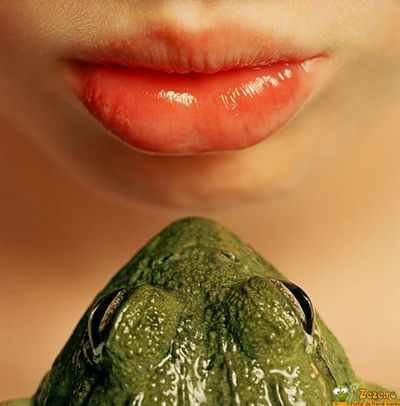
 There have been quite a number of analyses of The Frog King/Prince tale by many great scholars – but most center around the sexual awakening and fears of the young girl. Imagine taking a frog to bed: repulsive, cold, wet and slimy? Sex at first is scary, messy and unpleasant – until it has time to mature, evolve. The girl’s fears are justified. The frog represents this – and the metamorphosis of the frog to handsome prince, and the change in the desire of the young girl leads to her sexual awakening and womanhood.
The girl rebels against the pronouncements of her father, “Keep your promises!” Bruno Bettelheim (my favorite analyst of this tale) pointed out that growing up has consequences, and they are well illustrated in this tale. The fear of sex is represented by the ugliness of the frog, and then seen as – hmmmm – not so bad, when the frog becomes a handsome prince. This little story is a like a sex-ed course without explicitly mentioning sex. It is about metamorphosis, in more ways than one.
When I first heard the tale, I thought, “Why would he want a girl so spoiled and violent?” After reading it in several forms, I realized I rather admired her impulsiveness and anger at being thrown into a situation she didn’t desire. She was fearful but determined to protect herself. Ah ha – girl power! No promise or obedience is worth such self-sacrifice.
Perhaps it is the violence itself that attracts – as an excuse to submit (for the woman) or as a turn-on to the men? Hmmmmm, again. In the end, the princess got what she wanted – on her terms. Joseph Campbell delicately referred to the story as, “a call to adventure” (of course), while Jack Zipes, ever the blatant one, talks about the changes in the story (especially the way the Grimm's “cleaned” it up) as a “shift in norms and socialization reflecting the interests of the bourgeoisie.” He has a point – it was cleaned up and made into a bed-time tale. If Zipes were to rewrite this story today, he might call it,“50 Shades of Green Frog,” so ripe with symbolism and sexuality is this story.
The Iron Henry in some titles refers to a character only mentioned at the very end. A man servant to the King or Prince, so loyal that when the master was enchanted by an evil witch (we never know why) and became a frog, Henry wrapped three iron bands around his chest to keep his heart from breaking.Interesting. Perhaps the character of Henry is included as a contrast to the lack of loyalty on the part of the young girl, or as a role model for loyalty, which is a desirable trait. As the bride and groom ride away to begin their lives together- the iron bands break – symbolic of the change throughout the story. They find their “happily ever after.”

Leave a Reply