A couple of months ago I received my copy of the AARP magazine. Inside I found an article entitled "The Education of Frances Perkins.” The article stated that Frances Perkins became an activist because of the Triangle Shirtwaist Factory Fire on March 25, 1911.
When I was seventeen my parents moved to upstate New York to start a dairy farm. I moved into their friend's house to rent a room with kitchen privileges. I met another tenant named Anna. Anna, who was in her 50's, and I became friends. She was a member of the ILGWU – International Ladies Garment Workers Union. She was the first woman I ever met who was an activist. She fought to end child labor and she fought for women's rights.
Anna was the one who told me the story of the worst fire in the history of New York City long before I ever read about Frances Perkins. Anna was a great teacher. I was never able to forget this story about the Triangle Shirtwaist Factory Fire that she told me when I was a teenager.
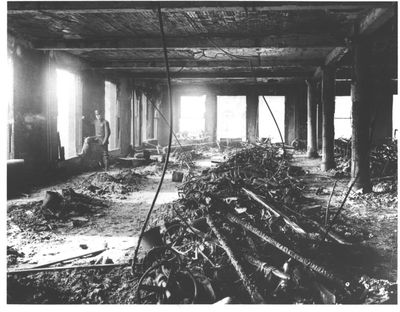
It was a Saturday afternoon in New York City. A fire broke out in a bin filled with fabric. The factory occupied the eighth, ninth and tenth floor of the Asch Building. Those on the tenth floor escaped across the roofs. Those on the seventh floor ran down the main staircase. Those on the ninth floor were young girls from ages 15 to 23. They were locked in so they wouldn't steal. They worked seven days a week, 7:00 a.m. to 8:00 p.m. with a half hour break. They were paid $6.00 a week.
The fire engines were called, but their ladders only reached the seventh floor. Their nets were flimsy. When the girls jumped they went through the nets. The one fire escape was also flimsy and bent from the heat. The elevator stopped due to heavy loads and some girls jumped down the shaft to escape the flames. Forty-nine girls and a few men stood on the window sills. They knew if they jumped they would die.
The flames built up behind them. Soon one jumped then a group of three jumped holding hands. If they landed on their backs they could be identified. If they landed on their chests they might be identified by clothing, dentures, or not at all.
The trial of the proprietors resulted in an acquittal. They were compensated for their losses by the insurance companies, and they moved their operations to another building. In 1914 they were ordered to pay damages of $75.00 each to the twenty-three families of victims who had sued.
(The image at the top of the post shows the aftermath of the fire on one the factory floors.)


Leave a Reply