“Great stories happen to those who can tell them.” — Ira Glass
As I mentioned in a previous blog post, public speaking was never really my bag of chips. Standing in front of people trying not to sound like I forgot how English works? Yeah… not exactly a dream of mine.
But this season of my life has been all about growth and change.
I have a bad habit of punching outside my weight class. I throw myself into situations I’m not fully prepared for and somehow the pressure forces me to level up. Storytelling has been one of those experiences. It pushed me way past my comfort zone socially, mentally and emotionally. Nervousness slowly became confidence and fear slowly turned into curiosity.
Since getting involved in storytelling, I’ve met all kinds of amazing people from completely different walks of life. Different backgrounds. Different struggles. Different ways of seeing the world. Listening to their stories forced me to listen.
Not just hear people. Actually listen.
Because you can’t tell meaningful stories without paying attention to people. You start noticing body language, emotions, tone and silence, the stuff people don’t always say directly. Storytelling invokes empathy because you start realizing that everybody is carrying something.
Liz Warren mentioned in class that the role of a storyteller is to be a disruptor and that idea really stuck with me. Because storytellers and comedians carry a similar responsibility. We disrupt comfort. We interrupt routine. We point out the weird contradictions people ignore every day. We say the uncomfortable thing everyone’s thinking but nobody wants to admit out loud.
A good comedian doesn’t just make people laugh.
A good storyteller doesn’t just entertain.
They tell the truth in a way people can actually feel.
The truth is that stories are how ideas enter the world.
Facts are important but stories are what people remember. Stories shape culture. They shape movements. Every generation survives because somebody told a story worth passing down.
For me personally, storytelling sharpened my critical thinking in ways I never expected. You can’t always rely on scripts. Sometimes you have to think on your feet and adapt in real time. You learn how to read a room, pivot, improvise and creatively communicate ideas. Storytelling teaches you that communication isn’t just talking, it’s translating human experience.
And maybe that’s why storytelling matters so much right now. We live in a world full of noise, scrolling, distractions and people talking over each other nonstop. Everybody wants to go viral but not everybody wants to connect. Storytelling cuts through that noise. It reminds people they’re not alone.
Walt Disney once said, “That’s what storytellers do. We restore order with imagination. We instill hope again and again.”
And honestly, I think that’s true.
Storytelling gives people perspective. Sometimes it gives people healing. Sometimes it gives people laughter when life feels heavy. Sometimes it gives people language for emotions they didn’t know how to explain before.
At the end of the day, I’m still learning. I still get nervous sometimes. But growth comes from stepping into spaces that challenge you and trusting yourself enough to grow into them.
Great stories don’t just happen to those who can tell them.
They happen to the people willing to live them first.
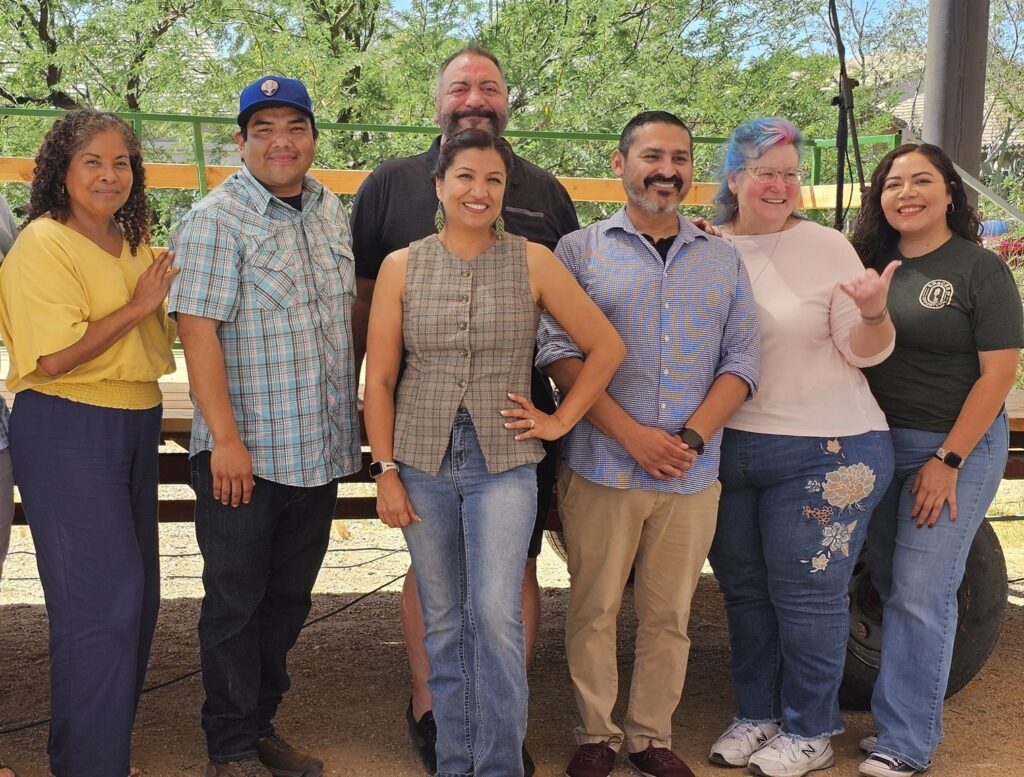
(Rigo is second from the left in the photo at the top of the post.)
Rigoberto Tavena successfully initiated his academic journey at South Mountain Community College, where he developed both his skills and professional foundation under the guidance of esteemed faculty. Armed with this strong foundation, a winning smile and unparalleled passion, he is now advancing to Arizona State University to test his abilities at a higher level. This move marks an exciting new chapter for a dedicated student whose heart and intellect make him a natural leader. His journey from SMCC to ASU highlights his commitment to excellence, combining a charming, charismatic approach with academic rigor.
Leave a Reply