Historical storytelling is an important way to bring forth broader “truths.” Only a few years ago did I begin to learn a different U.S. history than I had been taught as a child.
I started hearing horrendous stories about black life after the abolition of slavery, the genocide of Native Americans, and the cruel practices the U.S. employed as world imperialists. These stories were much different than those I had heard growing up that portrayed blacks as “stupid,” Native Americans as “savages,” and other countries as backwards.
How could my United States, based as it is in on the principles of equality, freedom, liberty and justice for all, be involved in such atrocities!? Hearing these stories has given me a more comprehensive understanding of the complexities of life. There is never one “truth, the whole truth, and nothing but the truth.”
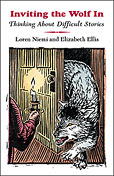
Elizabeth Ellis and Loren Niemi devote an entire chapter to historical storytelling in their book Inviting the Wolf In. They address the idea of “political correctness,” an oxymoron which is often used as a form of censorship. When we allow political correctness to dictate what stories we tell and how we tell them, we give up our authentic voice.
To maintain an ethical relationship with an historical story, two types of research are vital: primary sources (interviews, letters, journals, newspaper articles written by people immediately involved in the event), and secondary sources (biographies and historical accounts).
Oftentimes, primary sources shock and offend contemporary audiences because of their blatant sexism, racism, and classism, which are no longer “politically correct.” But it is important not to whitewash the stories, making the past seem cleaner than it actually was. Ellis and Niemi say it may not be possible to tell these difficult stories without offending.
History versus Heritage
An interesting article about telling at historic sites, museums and parks by Dale Jarvis can be found on St. John’s Haunted Hike website: This applied storytelling is more focused and has a more specific goal than stories told at swaps, concerts and festivals. Jarvis outlines six considerations for this type of telling:
1. Pick a time period, theme or person that interests you as a teller.
2. Utilize true, real life stories from real people.
3. Do your homework.
4. Provocation, not instruction.
5. History versus Heritage Value.
6. Use your storytelling experience.
Oral History
David Sidwell, Program Director at the American West Heritage Center north of Salt Lake City, UT, says personal stories are history in the making. He writes an interesting article called “Oral History,” which discusses how to collect and tell personal histories.
Suggested Reading
· Amato, Joseph. Rethinking Home: A Case For Writing Local History. Berkeley: U of CA Press,
2002.
· Dupont, Jean-Claude. “The Poker” in Living in a Material World: Canadian and American Approaches to Material Culture. Ed. Gerald Pocius. St. John’s: ISER, 1991.
· Strauss, Susan. The Passionate Fact: Storytelling in Natural History and Cultural Interpretation. Golden, CO: Fulcrum Publishing, 1996.
· Tilden, Freeman. Interpreting Our Heritage. Chapel Hill: U of NC Press, 1977. The classic work on heritage interpretation.


Leave a Reply