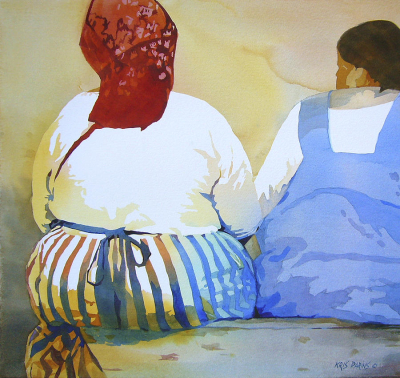
 I remember as a girl my mother and grandmother huddled together gossiping about a cousin “who had to get married and she was 32 years old!”. When I first heard this talk, I was too young to understand the implied scandal. Fortunately for me, this cousin continued her salacious lifestyle until I grew old enough to appreciate what the gossip was really about! At this point, the conversation between mom and grandma was based on repeating conversational fragments and implied ‘facts’ gleaned from other sources.
Over time these snippets of gossip developed into structured stories about my cousin. And as a teenage girl – I was told “these stories” as a reminder of where this type of unacceptable behavior could lead. What started as gossip between my mother and grandmother developed into full-blown traditional storytelling! At the base level, they were using the stories to connect me to other family members and values by providing a ‘road-map’ of how I should or should not act. Traditional storytelling was being used to influence my life and teaching me to negotiate the adult world I was entering. Their stories were being shared to help me reach my highest potential.
The stories my mother and grandmother shared were also connecting me to the community. They were teaching me shared values, truths about the adult world and creating an oral history. Young people today still learn how to negotiate the adult world through traditional stories, often based on family gossip! Yet today, contemporary youth would hear very different stories about the consequences of an unplanned pregnancy – they might not even understand the implications of “having to get married”. Their stories need to be based on ‘gossip’ and sources relevant to modern times. Traditional stories are not based on the repetition of the same stories; they are based on the functions of the stories.
The image at the top is by Kris Parins and can be found here.

Leave a Reply