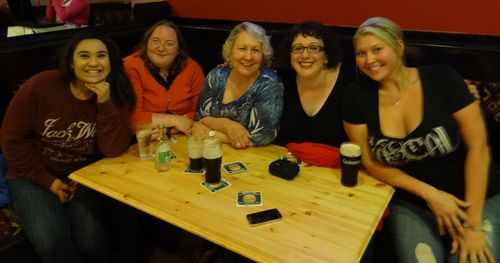
 I had an excellent group of students this summer in the Irish Storytelling Tradition. Their final papers revealed the breadth and depth of what they learned about storytelling in general and Irish storytelling in particular. Here are some excerpts from each of them:
Diana Lucente: I learned that seanchais
are often folks otherwise thought to be uneducated and illiterate, but who are
truly among some of the most intelligent and insightful and verbally talented
individuals. They are incredible artists when it comes to the spoken word- for
example, a turn of phrase, a description, or having a story for every occasion.
Those who appreciate these masters of the oral tradition, such as storyteller
Eddie Lenihan, are trying keep their stories and wisdom alive by listening,
recording, and disseminating them to the public and attempting to preserve them
for posterity. Otherwise, these tales will be lost when their tellers
pass away and our culture will be worse off for it.
Ernestina Montoya: One of the most important things I think
I learned from this class is appreciation – having appreciation for where the stories came from
and the culture they bring. Being able to have appreciation for the rich and
unfamiliar practice and ways of the Irish people is important. When you have
the appreciation you're able to have the skill to just listen and imagine.
Jamie Brewer: I learned that fairies and
fey creatures exist as a product of the people telling the stories about them,
shaped by their fears, hopes and beliefs. I was comparing them to ghost stories
as a way of saying that they were ways to explain the unknown. I think, hearing
that the fairies were derived from the Tuatha de Danann, that I was expecting
direct parallels between them. But successive generations of Catholicism,
poverty, superstition and to some degree demonization changed it to something
altogether different. The host at the storytelling dinner I attended in Dublin
explained it better though: it was the way by which people with very little
control over their world were able to cope with it, and feel like they could
get some control back.
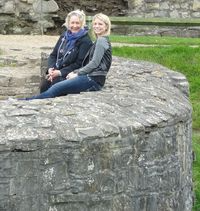 Haley
Haley
Maffia: I learned that the place where you tell your story really
helps your performance and helps you get more comfortable. Your comfort is key
because the more comfortable you are, the better your story will sound. I told
a story in a pub and I personally think I did a better job there than in a
classroom. I also noticed that I get very connected to my stories mainly
because I am in Ireland and something about being on the soil and knowing the
stories originated here makes me fall in love with them. Hopefully I can do the
stories a justice when I am back home in Arizona. I also realized I like to be
seated when telling a story because I am more relaxed that way.
Steve DesMarais: The world needs
more people to spread this tradition to ensure that new media doesn’t kill it.
Such a rich tradition is still vibrant and well here in Ireland, although it
isn’t as common as it once was. I fear that this tradition might become
something that’s not as important to the children as new video games, and as
television spreads to get their attention in new and exciting ways. While we
should definitely enjoy these new fun things and continue to progress, it’s
important that we don’t forget what has already been done. This way we don’t
need to repeat and waste time when new and greater things can be inspired from
the old materials of the past.
 Zach McKenzie: I
liked reading about how much a storyteller was valued back before electronic
devices. Some of the articles we’ve been reading give accounts of people
filling rooms to the brim just to hear one story. I liked learning that bards
and storytellers would be greeted and showed such hospitality. I also liked
that in that same article there was a storyteller who would tell serials each
day he was there. I also learned that places are very important to
storytelling. In almost all of the stories there is always a real setting in
Ireland that corresponds to the story. Like in my second story I told it was
set between Galway and Dublin. The Children of Lir is set in multiple places
in Ireland. It helps to give the audience a place that they might have passed
just that day to help immerse them in the story.
Bayliann Livengood:
History
has always been one of my weakest subjects. I find it boring and worthless. Yet, somehow,
over the course of these last few weeks, I have learned a surprising amount of
history through the stories I’ve heard, read, and told. Yes, most of it is
fiction, or legends, but it’s still history, because it’s part of the land. It’s
part of the people. I’ve never had a connection with a place that has
historical relevance. I’ve been to Normandy, I’ve been to Pearl Harbor, but
I’ve never felt a connection with those places like I do when I see a fairy
tree, or another place that I read a story about. That makes it history in my
eyes. Storytelling has been a tradition for a very long
time, which also makes it history, but today’s world is changing fast, and with
it, old time traditions are changing too. Reading the profile about Eddie
Lenihan opened my eyes to a whole world of people dedicated to preserving the
stories that have been told for decades, but are at risk of being lost with the
generation of people who were here before handheld technology. Thankfully, it’s
people with that burning passion, like Eddie Lenihan, who we owe for saving so
many stories already. Before this class, I never would’ve known who Eddie was,
what he stood for (in some cases literally, as we read in the other article
about him), or that what he does is so important to the storytelling tradition.
Keely Parrish: I now know three stories and one
poem well enough to tell: Hudden and Dudden and Donald O’Neary, the
Children of Lir, Fair Brown and Trembling, and the poem The Wind that Shakes
the Barley. This to me is the most important things that I learned during
this class. I can go home and share this with all of my family and all of
my friends. These stories are things that I hope to keep with me for the
rest of my life and improve upon as time goes on.
Wendy Townsend: I can competently tell stories and you can still
tell stories even if you have stage fright. I was very anxious when I first
heard that we would be required to tell stories to our classmates. I have
always suffered from pretty severe stage fright, so I was worried I would not
be able to be a good storyteller. When Liz Weir came and spoke to our class,
the point that stuck out the most to me was when she said that she experiences
stage fright, but she is a professional storyteller anyway. You can still do it
even if you have stage fright; in fact, Liz assured us that it actually helps lessen
your stage fright. I am not sure about that last point, but I certainly agree
with the rest. I was pleasantly surprised to learn that I am perfectly capable
of telling a good story to an audience.
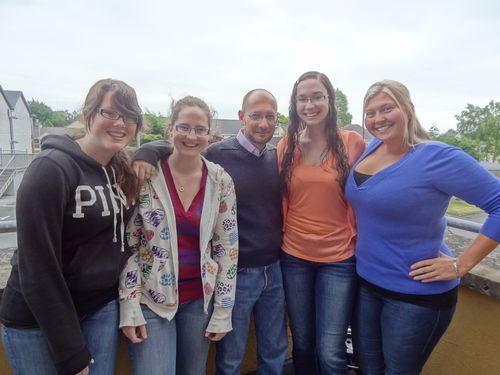
At the top of the post: Ernestina Montoya, Jamie Brewer, me, Diana Lucente and Karen Acuna. 2nd photo: Haley Maffia and me at Trim. 3rd photo: Zack McKenzie and Steve DesMarais and Megan and Edward's birthday party. Last photo: Bayliann Livengood, Keely Parrish, Barry Vaughan, Wendy Townsend, and Karen Acuna at the same party.
Leave a Reply