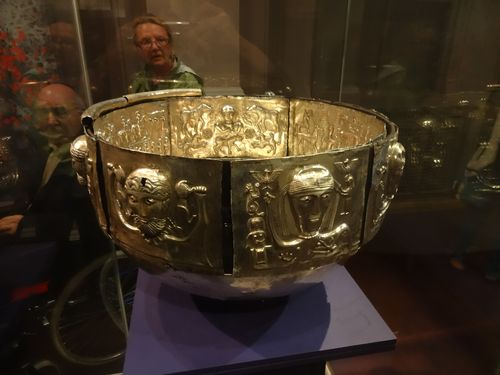
I was, as they say, gasping for a cup of tea at the National
Museum in Dublin on Friday. I was
following the signs to the café, when I came around the corner and saw the
Gundestrup Cauldron. Not what I was
expecting to see to say the least – last I’d heard it was in Copenhagen! My mind was spinning . . . I can’t believe the Danes would let it out of the country. What’s it doing in Dublin and why isn’t that big
news? Where were the banners on the outside of the museum announcing it? Why didn’t I know about it?
Finally I calmed down enough to look at the label, and sure
enough, it’s a replica. When I told Barry about it later he told me it’s been
there a long time. I don’t know how I
missed it before, but it was a huge treat to see it. It’s an astonishingly compelling vessel. I would love to know how it was
replicated. As so often happens with
things only seen in pictures, I had no idea of the real scale of the object. I
had always imagined it about a foot across and maybe 8 inches high, when in
reality it’s over double that in both dimensions.
The cauldron was found in a bog in Denmark in 1891, and is generally estimated to have been made between 200 BCE and 200 CE. It is an invaluable source of information on
Celtic mythic iconography. The interactive
video display at the museum explained the gods and goddesses represented in
terms of their functions – goddess of war, goddess of death, etc. Some scholars
believe that the images relate to Queen Medb and the Cattle Raid of Cooley. The
big bull in the base of the bowl is the Brown Bull of Cooley. The goddess figure with a man over each
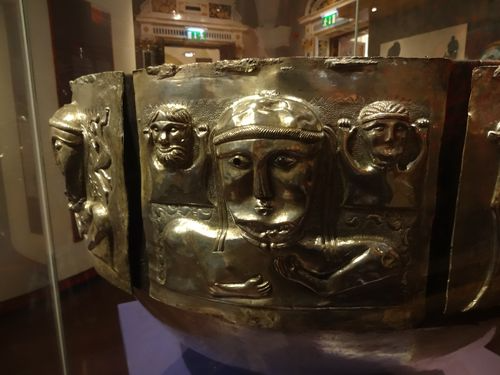
shoulder is Medb with her lover Fergus and her husband Ailill. The goddess with the birds above her shoulder
is Medb as Morrigan.
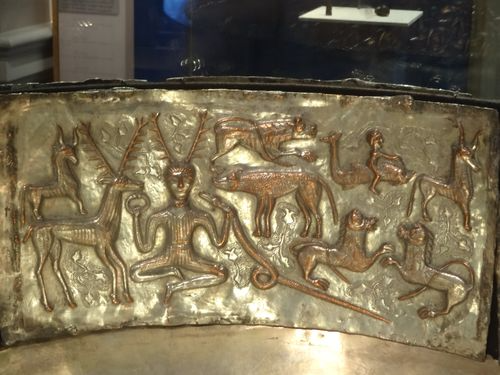
Here is the shot I took of Medb with lover and husband. Below that is probably the best known panel
which shows Cernunnos, or maybe Cuchulainn.
Leave a Reply