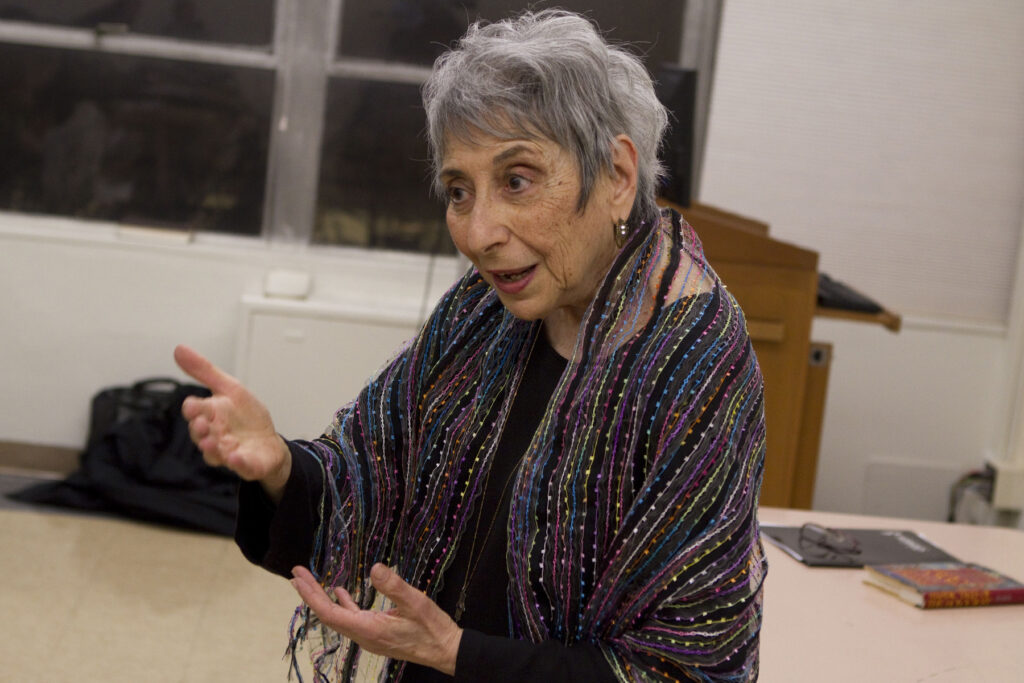
Sometime in the late 1990s I attended a workshop conducted by the renowned storyteller and author Peninnah Schram. She was visiting Arizona and held the workshop in the large sanctuary of a church in Scottsdale. She led us in an exercise called “Learn a Story Fast,” and I’ve been using it myself ever since – probably hundreds of times. I think of her every time with gratitude as it is a very effective exercise. I almost always use it during the very first class when I teach The Art of Storytelling. It’s a very good way to both show students what they will be doing in class and to reassure them that it is doable. Since the stories used in the exercise are folktales, it also grounds them in traditional stories. This provides them with a foundation for all the genres of stories they will be telling.
The beauty of the exercise is that it shows people that they can quickly learn and tell a short story in their own words. It allows the facilitator to remind them that the goal of storytelling is not memorization, but to learn a story and tell it in your own words and with your own style. Since the exercise is fast-paced, people don’t have time to overthink. They just have to tell the story! In addition, the steps used in the exercise – reading, chunking, talking about the story, and retelling as soon as possible are just as useful when learning longer stories.
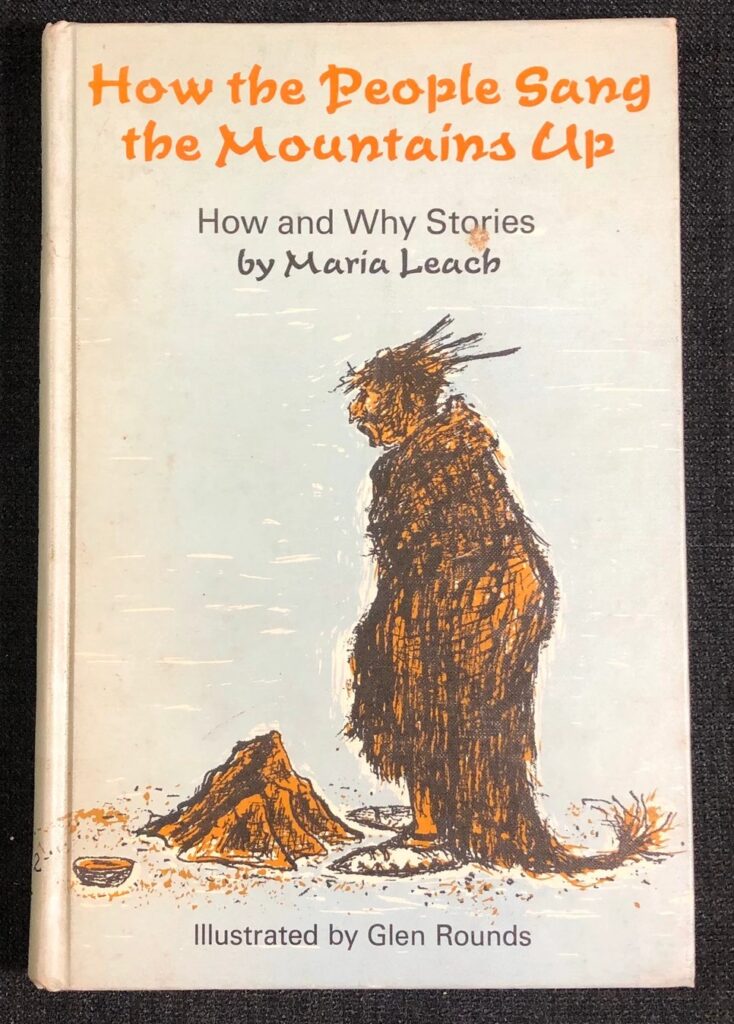
“Learn a Story Fast” is a group-based activity to engage people in quickly telling a short story from a textual source. You will need several short folktales to conduct the exercise. Peninnah used stories from How the People Sang the Mountains Up by Maria Leach. That’s what I use, too, but I’ve supplemented my favorites from HPSMU with some additional equally short options. This process usually takes about an hour. By the end of the exercise participants will know the story they prepared with their initial group, but can usually tell some of the other stories, too.
Here’s the process plus some tips:
- Before the exercise, have your stories prepared. I keep a document with the ten short stories I like to use, with three of the same folktales on a page. Print that off and cut the pages so you have the stories ready. You’ll end up with ten little piles of three stories. Each group will receive a different story.
- Prepare the ground by giving them a general idea of what they are going to be doing. Don’t get too specific. It’s not necessary to use your time that way
- Be sure to tell them that storytellers do not memorize and that you are not asking them to memorize the story they will be working with. You are asking them to learn it and then tell it in their own words. Be sure to remind them that it is meant to be fun!
- Break into small groups (3 or 4)
- To break them into groups, have them number off for as many groups as there are going to be. Then assign each group to a spot in the room and have them assemble in that spot. For example, 24 people would number off 1 – 8 for eight groups of three.
- Ask them to introduce themselves to the other members of their group.
- One person can easily handle 30 people or 10 groups of three. For more than 30 it’s very useful to have another facilitator. This is especially true if you are using it with children. Even with a small group of children, enlist the teacher or leader to help keep the groups on target. You can do it with a very large group as long as you have an additional facilitator for every 30 people. For a large group you also have to budget more time to distribute the materials and for them to move around.
- Give a copy of the story to each member (each group has a different story)
- Instruct them to read the story to themselves silently.
- The next several steps are where your work comes in, especially if you are managing the process orally. I like to keep the groups more or less on the same step in the process. That means that I am constantly moving around, seeing where they are, and telling them what to do next.
- Ask one person to read the story through to the others.
- Ask them tochunk the story into thirds and each person read a chunk.
- I usually tell them to just eyeball it and break the story into as many chunks as there are people in the group.
- Repeat until each person has read each chunk.
- Person A reads chunk 1, Person B reads chunk 2, and Person C reads chunk 3.
- Then, Person B reads chunk 1, Person C reads chunk 2, and Person A reads chunk 3.
- Finally, Person C reads chunk 1, Person A reads chunk 2, and Person B reads chunk 3.
- Talk about the story, what it means, did you like it, etc.
- This is where you can catch the groups up if they are not all at the same point.
- I tell them that it’s ok not to like the story. They didn’t get to pick it themselves, and ideally, they would pick one they really like.
- I ask them to think about the big ideas in the story. Even if it seems silly, can we see it as a story of love, redemption, greed, betrayal??
- Put the story aside.
- I require them to physically put the stories under their chairs.
- Go around the group and each person tells a chunk of the story
- I ask them not to consult the story, but rather to just help each other out.
- Then, each person tells the whole story to the group.
- Same as above. Remind them to tell the story in their own words and to help each other out if memory fails.
- Instruct them to find a space in the room and tell the story to the wall
- Before I do this, I go around to each group and assign each member a letter. This is for the groups they will reassemble in.
- Before I send them to the wall, I remind them that a storyteller’s instrument is his/her body. I have them shake their hips, wave their arms, whatever. I then tell them that the story will inform their bodies about the gestures needed to bring it to life. I encourage them to let the story do just that and not to censor their desire to move.
- Then I tell them to each find a space at the wall and to tell the story to the wall, with all the attendant gestures.
- This is usually uncomfortable for them, but there are two good reasons to do it. First, it gives them one more practice. Second, it makes them grateful to tell to actual people!
- Reform into new groups where each member has a different story.
- If you had eight groups of three, you’ll now have three groups of eight.
- Each person tells their story to the new group
- I ask them to form a circle and stay standing.
- Each person introduces him/herself and tells the story that they just learned.
- Remind them to applaud when each teller finishes
- Ask them to return to their seats after everyone in their group has told.
- Ask for volunteers to tell to the whole group.
- I like to try to get someone for each story to come up, depending on how much time you have.
- I comment on what each person does well to reinforce how natural it is to tell a story.
- Engage the whole group in a discussion of the process and what they learned, noticed or found surprising.
- Usually, someone will tell you that they had no idea they could learn a story so quickly. If they don’t, I just ask outright and someone will usually confirm.
The image of Peninnah Schram at the top of the post can be found here. Go here to hear her tell a story.
Leave a Reply