Is a legend really a biographical story embroidered with exaggeration? Or, is it a tall tale fertilized with regional braggadocious embellishment? Perhaps it is a myth in legend’s clothing?
In my humble opinion, the lines between these genres is not cut with a straight edge razor. It’s rather more like an artistic tear.
Legend has at its core a person, place or event that was real. But what makes them legend? Each is somehow bestowed with additional power, and maybe some magic, to make an astounding story. The values and ideals of the communities from whence they were born have built into them significance beyond the facts themselves – exaggerations that became belief.
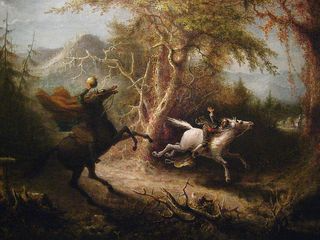
Davy Crocket did not kill a bear when he was three years old, but he was a fierce defender of life and freedom. George Washington did not cut down a cherry tree when he was a small boy and then confess to it, but he was one of history’s greatest leaders. Dracula was not a vampire; he (Vlad the Impaler) was something much worse than that. Tales of the headless horseman are being told in movies today (The Legend of Sleepy Hollow), but then there is Mike the Headless Chicken.
Many legends inspire, instill pride, help us cope, and give us hope. We are the richer for them. The stories of Johnny Appleseed, Davy Crocket and Robin Hood are inspirational. Such stories gave the underdog a hero to emulate and from which to take hope.
The unequaled quality of life in California during the gold rush days became legend. “California” from QPB Treasury of North American Folktales edited by Catherine Peck, records the plight of a 250 year old man forced to leave the state in order to die, due to the life preserving qualities of living in California. Upon being returned to his home state for burial, he came back to life! A tremendous sense of pride of place set this legend in motion.
The horrible dust bowl days of the 1930’s were painfully real. Coping mechanisms were essential, and the infusion of exaggeration, and humor, into this heartbreaking real event of misery spawned legend. Farmers in Kansas had to pay taxes in Texas because that’s where their farm land had blown. Others had to wait until spring to plow when the south winds would blow their farms back up to them. Smart farmers didn’t worry about rotating crops; the wind did that for them.
My favorite legend quote is from Stephen Dunn: “There are always the simple events of your life that you might try to convert into legend.”
What do you enjoy about legends? What’s your favorite? Are you a legend in your own mind? Let’s hear from you and so you may become a “Legend of the Blog.”
The painting at the top of the post is The Headless Horseman Pursuing Ichabod Crane by John Quidor


Leave a Reply