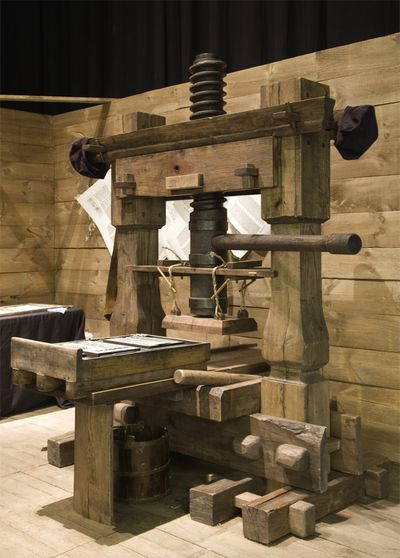
 Oral Tales began to change in the 1440s. Johannes Gutenberg began to experiment with metal type for each letter of the alphabet. He designed a mold to hold individual pieces of type. He found the best formulas for black ink. He designed a press to hold the paper against the inked type. In a time without patent law to protect new inventions he had to be very cautious. In the 1460's after many years of trial and error, his printed books were released to the public.
Europe was primed for the printing press. Paper was being widely manufactured, providing an inexpensive substitute for animal skins. Steam powered presses were developed in the eighteenth century. Jack Zipes wrote,"With the increase of literacy throughout the world, the literary fairy tale produced as book, hypertext on the Internet, advertisement for commodities, scripts for film, radio, and television, comic, cartoon, and cultural artifact has grown in relevance." Francis Bacon in the 1620s noted that there were “three inventions unknown to the ancients; namely, printing, gunpowder, and the compass. For these three have changed the appearance and state of the whole world.”
The picture at the top of the post of a replica of Gutenberg's Press can be found here: http://kottke.org/10/08/short-history-of-print-in-two-pictures

Leave a Reply