 Native American stories are considered to be a type of “Medicine,” which is often the closest English can come to a combination of Power, the Sacred, and Community. Unfortunately, they have often suffered from censorship and simplification when they were recorded by non-Native ethnographers and historians. Two of the finest works I know that explore this were written by American Indian scholars. Keeping Slug Woman Alive: A Holistic Approach to American Indian Texts by Greg Sarris (Miwok/Pomo) goes into great detail about hearing the traditional stories his relatives would tell, and the versions that were written down.
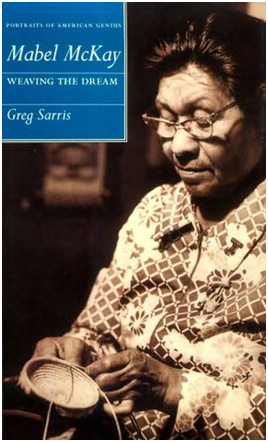
I met Greg Sarris a number of years ago when he was at UC Santa Clara. He took me up north to meet Mabel McKay, the Medicine Woman who helped raise him. In our discussions, I learned about an ethnographer who was recording their Native Coyote stories. She did not understand enough of the language to catch the nuances. She recorded in her notes “Coyote was going there,” four different times, and then felt it was too repetitive, and edited the lines. What she didn’t understand was that the Storyteller was subtlety altering the verb to change the meaning: “Coyote was going there in a cocky manner,” or “Coyote was going there with pride.” Just so, she also missed the ritual use of the four repetitions to signify the Four Cardinal Directions, and the significance of the Four Seasons to complete a yearly cycle.
I also remember in 1980, when Mount St. Helens “blew up,” I received many phone calls from reporters who were aware I was a Native Storyteller, and wanted to know if I was familiar with legends about the mountain. I started to laugh because it made me realize I had never heard a mountain story told all the way through in English. An Elder might start the story in English, but when he or she got to the “good parts,” the Storyteller would switch to the Native language. This is because so many of the mountain stories deal with the mountains fighting with each other, ripping off each other’s genitals and breasts and other body parts, flinging them far away. This was an instance of self-censorship, but many ethnographers were known to “clean up” what they considered “inappropriate sexual references” in traditional stories.
 Another who addresses these issues is the Laguna/Pueblo writer, Paula Gunn Allen. Her book, The Sacred Hoop: Recovering the Feminine in American Indian Traditions, very effectively presents three different versions of a Laguna legend. One is from an earlier generation, during a period of anthropology when everything seemed to be “symbolic sun myths,” and the dark clouds would “war” against the light. She then takes the same legend, but retells it in the voice of a 20th century Feminist. The third time, she tells it as a member of her living community, and the story is about the ritual exchange of ceremonial power between the two moieties. All Pueblo cultures are divided into two groups. Some communities call them the Summer and the Winter People, some will name them the Turquoise People and the Squash People. Responsibility for conducting the sacred ceremonies are turned over to the other moiety, so one does not dominate the other.

Leave a Reply