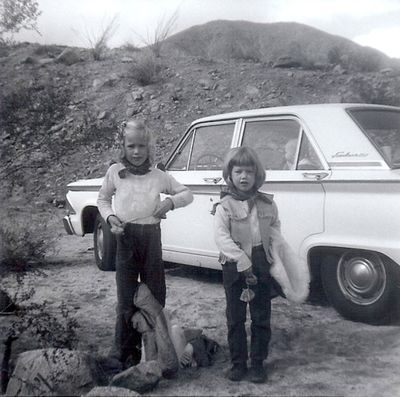
 “Remember when we were little,” was a common phrase my sister and I used in our very young childhood, not knowing how silly that sounded considering our diminutive size. We were merely modeling our beloved experience of listening to the stories of our family elders. Mutual reminiscing and storying helped shape who we were becoming. My stories gave me strength and told me who I was through a process so natural I thought it was the same for everyone.
As teenagers, my friend and I were experiencing our newly found freedom roaming the city on our bikes. We got horribly lost. We pedaled far and long trying to find a familiar street or landmark, but I wasn’t worried or upset. I remember laughing and telling her, “this’ll make a good story.” I’ve survived many an awkward, embarrassing, and terrible experience by telling myself, “Well, I’ll have a good story to tell!”
Not only did I tell my stories to my sister and myself, but also to my parents and other siblings. I’ve continued to tell my stories to my husband, my children, my friends, and even strangers. Telling my story helps me sort things out. I feel good when I’ve been allowed to speak my story. When I’ve been heard, I feel validated and empowered. It gives me hope.
My experience with personal story told me it was powerful, but I didn’t know how others consciously tapped into it for growth and transformation. This past July I learned how the power of personal story is used in counseling and in community groups. Lani Peterson, a psychologist and professional storyteller, presented an intensive workshop, “Exploring the Narrative Healing Process,” at the 2015 National Storytelling Conference in Kansas City, MO. The narrative healing process is about purposefully searching out, crafting, and telling one’s personal story. She spoke of thin stories and thick stories. Thin stories are narrow and deep ones that don’t sustain us, as opposed to thick stories – ones that support us to move forward. Telling thick stories or new stories can help us to get unstuck and overcome problems.
Lani taught a tool she uses called the Circle of Chance. It’s an activity with interesting visual perspective with the story you were born into mapped into a spiral. She said, “Chance is what happens to you. Choice is what you do about it.” The narrative healing process helps one to discover your story and then empowers you to make changes in your future story. She shared the Story Arc – an aid in the reworking of stories. Her handout shows the Hero’s Journey Arc overlaid with the Narrative Healing Stages. Lani teaches shifting the perspective or lens through which the story is viewed. Her stories of her work with disenfranchised populations were compelling! To hear some of these for yourself, listen here: A Continuation of the Conversation on Running “Healing through Our Stories” Groups: Lani Peterson, Recorded April 7, 2014.
To see her Story Arc and other resources look here and here.
Realizing our own story is our first step to using personal story as a tool. Then ensuring it’s a thick and sustaining story will help us into the future. Knowing and trusting our new thick story is next. And finally comes telling our story to others. These steps will empower us to succeed on our own hero’s journey.
(The picture at the top shows Leticia on the right and her sister Edonna on the left.)

Leave a Reply