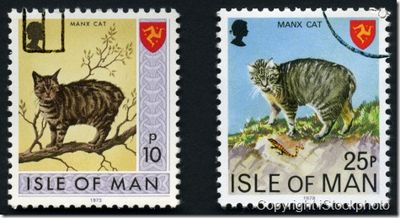
 On the Isle of Man, the cats have no tails, but that does not mean they or tale-less. In fact those cats that live their lives tail free have many tales. Some of their tales explain their tail-less origins: Noah was getting ready to close up the ark, but the Manx cat was too busy to bother with boarding. Just as the ship's hatch was shutting that old cat sauntered up to the door, and then scurried in through the opening, as cats tend to do. Alas, his tail didn't make it and that was the end of the Manx cat's tail, but not its tales. Others speculated that when the Vikings took the island, they would grab up the cats by their tails, prompting all the mother cats to snip off the young ones' tails, thus ending their tails, but again not their tales.
Of course, there is probably a scientific explanation of the non-tail-bearingness of the Manx cat. Maybe the predators of that particular feline were easily able to snatch them up by their tails, much like the Norsemen. Over time the cats with the shorter or non-existent tail gene survived, and huzzah!, another tale of the tail that doesn't appear on Man.
Man is not the only place where man has used his knowledge of the world around him to explain the world around him. Folklore is truly the art of making sense of the world using the tools that folks have available: nature, knowledge, history, frame of reference, etc. Science uses the same tools. Are their results more factual in reporting the actual? Think about this: The scientific method requires that all hypotheses have one characteristic that they share with all the tales about tails or all other tales. They must have the ability to be proven wrong.
I'd rather tell the tale about Noah and the tail. It's more fun.

Leave a Reply