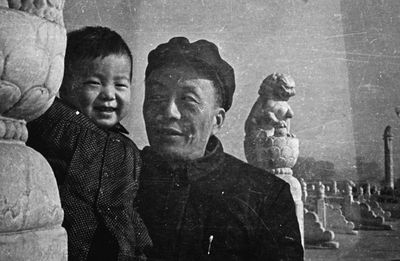
 I sat down with my cup of coffee this morning and read an article in the current Smithsonian magazine about the Chinese artist Ai WeiWei, who currently cannot leave China and is under constant surveillance. He recalls an incident in his life which inspires his latest artistic endeavor. Ai recounts that his father was a great poet. He also supported Mao Zedong’s Communist party. Later, during t Mao’s purge of intellectuals, Ai and his family were sent to a labor camp. Ai recalls that the physical hardships were terrible, but he says, “I think the hardest thing for my father, or for other people in prison, was being cut out from people’s minds. I still remember when my father was in exile in Xinjiang, he received an anonymous postcard; it said something about the 30-year anniversary of one of his poems. …it meant that someone didn’t forget. My father was deeply touched, in the middle of the desert, where he thought no one remembered him.”
Reading this article brought to my mind the following short story found in Arthur W. Frank’s book Letting Stories Breath. The story is titled “Christmas Eve” and is by Eduardo Galeano.
“Fernando Silva ran the children’s hospital in Managua. On Christmas Eve, he worked late into the night. Firecrackers were exploding and fireworks lit up the sky when Fernando decided it was time to leave. They were expecting him at home to celebrate the holiday.
He took one last look around, checking to see that everything was in order, when he heard cottony footsteps behind him. He turned to find one of the sick children walking after him. In the half light he recognized the lonely, doomed child. Fernando recognized the face already lined with death and those eyes asking for forgiveness, or perhaps permission.”
Fernando walked over to him and the boy gave him his hand. “Tell someone,…” the child whispered. “Tell someone I’m here
When I first read this story, I did not enjoy it one little bit. It tugged at me. It felt incomplete. What am I supposed to do with the ending of this story? It haunted me, swirling around in the recesses of my brain, down my spinal cord, into my heart, into my stomach, into my guts.
Then I thought of Yashinksy’s comments in Suddenly They Heard Footsteps:“Stories are how we know our passage through life has been seen, remembered and valued.” Frank affirms this and furthers the idea that stories are semiotic beings, they are “made of air but leave their mark.” Not only do they help the listener and teller to remember, but stories and people “shape each other, each companion enables the other to be” (Frank, 43). The person who sent the card to Ai’s father knew the importance of remembering and did something about it.
Suddenly, I realized the truth in the short story “Christmas Eve”. I live in a world full of loneliness and suffering. There are so many people with a story to tell so they will be remembered. There are so many that need a kind word or a note that says, I value you. Your story is meaningful. I acknowledge you as a precious human being. What am I going to do about it?
The image at the top shows Ai Weiwei as a baby in 1959 is with his father Qing in exile.(http://www.dailymail.co.uk/home/moslive/article-2292669/Ai-Weiwei-Chinas-famous-dissident-artist-opens-ordeal.html)


Leave a Reply