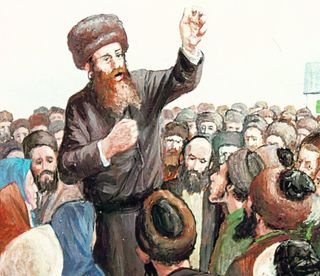
 On the last day in the life of the Jewish mystic, the Baal Shem Tov, he gathered his disciples beside him. On his deathbed, he bequeathed to them his worldly possessions. When he came to the last disciple, there was nothing left. However, the gift he was given was to go out and retell the stories of his master. He would receive a sign when he was done, and then the rest of his life would then be in ease.
The disciple was disappointed in what his master had left him, but he did as he was told. He spent months, then years traveling around Europe telling his stories. He began to think he had told all the stories in all the parts of the world, and there would be no more to tell.
One day the disciple was called to the palace of a great nobleman. The man wanted to hear stories, and the disciple told for four days. As each story came out, the nobleman sat in silence, unimpressed. Finally, in frustration, the disciple said, “I have no more stories to tell you”, and began to leave. The nobleman asked “surely you have one more?”
There was one more story that hadn’t been told. The disciple described the time the Baal Shem Tov had asked him to accompany him on a trip to Turkey. This was a dangerous time and place, as the Turks persecuted the Jews. Also, it was Holy Week, a time when religious fervor and violence towards non-Christians ran high. However, the two went on the journey, and the disciple was terrified when the master told him to summon the Bishop for a meeting. For that Bishop was responsible for the treatment the Jews received, including the killing of them. The meeting was held, and the Baal Shem Tov and his disciple returned home.
When he finished, the disciple apologized for the insignificance of his story, but he was amazed to see the great man was in tears. When the nobleman could speak, he said, “That is my story, as I was the Bishop you tell of. For years I have been paying for the evil I had done. And your master told me in that meeting, that when a man comes to you, and tells you your own story, you are forgiven.” The disciple then spent the rest of his life in ease. And the Bishop’s heart was at rest.
Sometimes storytellers shy away from telling personal stories. We do not want to appear selfish, and we think our stories are not all that unusual. We believe the events in our lives are not that interesting, and not worthy of being the basis of a story. The disciple thought his story was not important, nothing he had told before. But often what has happened to us will resonate with another human being. When we tell about what it was like, what happened, and what the outcome was, it becomes a story to share. We can be the main figure, or a helper like the disciple was to the Baal Shem Tov. Either way, we become the hero of our story.
The phrase about hearing your own story is an ancient one that is still used today. It appears in 12 step programs, spirituality, and mental health groups. You will hear your story, and often it comes from someone or somewhere you least expect it. It may come from your family, friends, or even a stranger. My story has been told to me by a man in a parking lot in San Francisco, and by a homeless man outside a Circle K store in Phoenix. When you remain open to stories, you will be able to tell them, and more importantly, hear them.


Leave a Reply