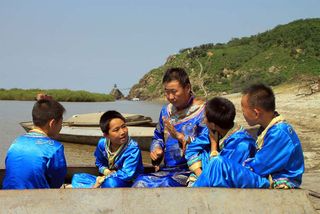
 Storytelling had an impact on the daily life of the Chinese townspeople as it served as the "university of ordinary people". Culture and knowledge was communicated in an entertaining and simple way. In the past storytellers would be invited to perform for a specific time, one day to several weeks, in a private home, usually for the festivals of wealthy families or in a public institution. Today, there may be special storytelling performances in factories, civic or corporate functions.
There continues to be a large number of local varieties of storytellers all over China. The question is whether these arts will be able to live on into the second millennium due to the pervasiveness of modern technology and it’s applications and devices.
New media technology is a threat to the oral arts, but it is also a great advantage for preserving the arts that are alive today. A UNESCO report, dated Nov. 23, 2011, stated that Yimakan storytelling, a form of verse and prose telling from north-eastern China had only five remaining masters, down from 20 in 1980. It was deemed in danger of disappearing and placed on a list of Intangible Heritage in Need for Urgent Safeguarding.
The Yimakan artists perform cantos, long poems, and traditionally improvise their stories of tribal alliances and battles without instruments. They alternate between singing and speaking and using different melodies to connote different characters and plots.
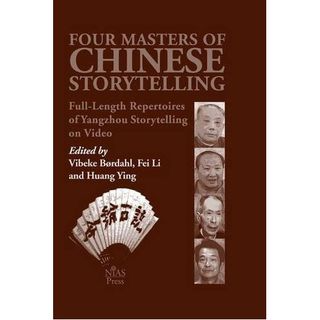
A prior famous master story teller was Wang Shaotang, (1889-1968) from the Yangzhou Storytelling School. There are four current master tellers; Dai Buzhang from Journey to the West of the Dai school; Gao Zaihua from the Kang School of Three Kingdoms; Fei Zhengliang from the Wu School of Three Kingdoms; and Ren Jitang from the Wang School of Water.

Leave a Reply