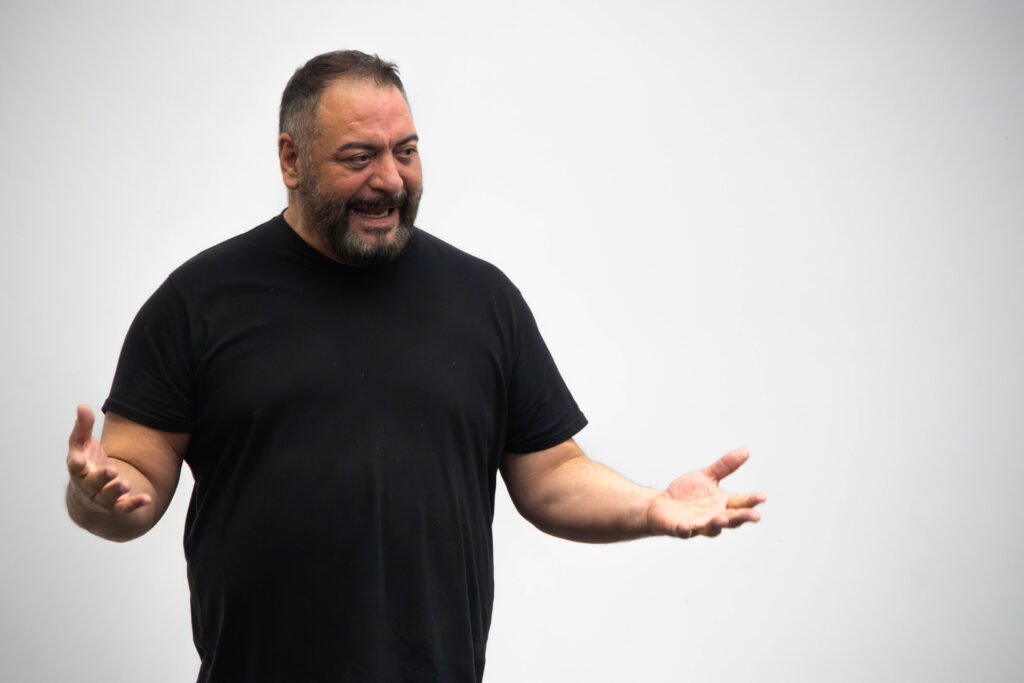
My deeper relationship with storytelling began when I started telling the stories I had kept hidden for most of my adult life. One of the first big stories I told was about my HIV status, something I had kept secret for almost thirty years. I was not walking around thinking of myself as depressed, and I was not looking for storytelling to replace therapy or become some kind of cure. What storytelling did was different. It allowed me to enter a part of my life that I had compartmentalized for decades.
For years, that part of me had been locked away. I could function, laugh, work, create, and live my life, but there was still this hidden place I did not talk about. When I began telling those stories out loud, the ones I had avoided and protected and buried, something shifted. Storytelling became the light out of a dark and secret tunnel. It did not just heal the specific part of me connected to HIV, shame, and silence. It opened something larger.
The change came quickly, sometimes faster than I knew how to manage. It was almost like my body and soul were trying to catch up to the part of me that had lost those years. As I kept telling the truth, I started to grow in ways I did not expect. I found more of my own power. I began to see more possibilities for my life. I started living with more purpose and with a kind of openness I had not fully allowed myself before.
That is part of why I believe so strongly in personal storytelling. When people first talk to me about storytelling, they often say they do not think they have a story. They may have a memory, a painful experience, a funny moment, or something they have carried for years, but they do not always recognize it as a story yet. What I have learned through telling, coaching, and teaching storytelling is that stories often begin in that uncertain place. The work is not just remembering what happened. The work is shaping the experience into something that has meaning, order, and connection.
I have also seen this happen in the people I have coached. Sometimes a person begins with what sounds like a simple anecdote, but as they tell it and receive positive feedback, they discover something deeper. One of the things I value about the South Mountain storytelling process is that the response begins with what is working. People are invited to say what stayed
with them, what they connected to, what made them laugh, or what image they could still see after the story was over. That kind of positive feedback helps a storyteller feel safe enough to keep going, keep shaping, and keep trusting the story.
At the same time, I do not believe storytelling should be treated as a
replacement for therapy or mental health care. Some stories are heavy, and some people need more support than a workshop, class, or stage can provide. But when storytelling is guided with care, boundaries, choice, respect, and a process that helps the teller feel supported, it can become a powerful tool for connection, reflection, and recovery. A story does not have to solve everything to matter. Sometimes the power is in finally being able to say, “This happened. This is what it meant to me. And now I can share it.”
Christopher Hooper is a Phoenix-based storyteller, producer, teaching artist, and co-owner of Dirty Bits, Arizona’s adult R-rated storytelling show. He has created and produced many shows in the LGBTQ+ community over the years, with work rooted in humor, identity, community, and live storytelling. Outside of his show production work, Christopher also explores the connection between personal storytelling and mental health through teaching, coaching, and community-based storytelling. He is a Community Storytelling Fellow through the South Mountain Community College Storytelling Institute. His essay, “Personal Storytelling and Mental Health Recovery,” was published in *Two Waters Review*.
Instagram: @choopystylin
Dirty Bits: dirtybitsphx.com
Leave a Reply