I have an excellent group of students this year. I have been impressed and moved by their responses to the class readings. My own understanding of the issues is often deepened and expanded by what they write. Below are some selections from the first week.
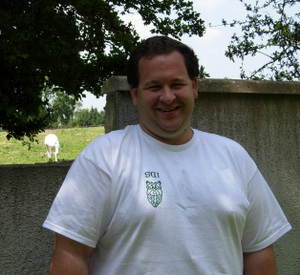 Sean Covington (aka Skippy): It really painted the storyteller as a romantic figure who not only entertains but also teaches. It made me want to be a storyteller as much as a knight in shining armor riding on his glorious white steed into battle. (In response to Mara Freeman’s “Word of Skill”)
Doug Bland: Lir has four children whom he loves with a passion. This causes a great jealousy in their stepmother. She orders them killed. When the order is refused, she attempts to kill them herself. Failing, she places a magical curse on them which turns them into swans and send them into exile for 900 years. By the time their exile ends, at the beginning of the Christian era, the Tuatha de Danaan have passed into legend and there is no place for them in the mortal world. They die together. Damn sad story. (His summary of the Children of Lir)
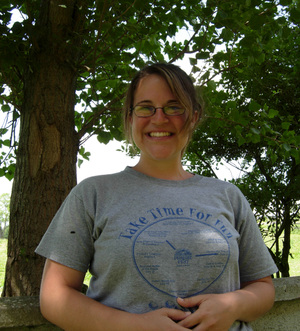 Ashley Dobbins: My grandparents are from Ireland and they would always tell my sister and me stories growing up about leprechauns and banshees, but at the time, we thought they were just fun stories. I now realize that these stories they told were a major part of their culture. My grandpa would tell us that he met a leprechaun named Rufus Knickerbocker and he outwitted him enough to find his pot of gold, but he turned his head at the last second, and it was gone. He would also tell us a story about being out at night and hearing a moan from the house up on the hill. He ran home as fast as he could because he knew it was the call of the banshee. Also, when the article mentions the fact that much storytelling takes place at wakes remembering those of the deceased, I recalled coming to Ireland for my great-grandpa’s funeral and how many stories were told during that entire week. Story, after story, after story; they just kept coming! The last point I thought was the funniest. The fact about the Yank and Paddy jokes made me laugh because I fit into that category! I have close Irish heritage and I come over here thinking that I am “all that” returning to my homeland. But then I look at my actual Irish cousins living here and I am reminded that I am an American and I need to watch myself! (In response to the Ireland entry in the Greenwood Encyclopedia of World Folklore)
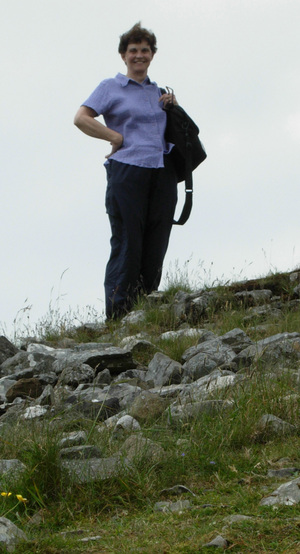 Joyce Story: I appreciated Freeman’s appealing evocation of the “fireside teller”; such a practice seems so vastly superior to our modern retreat within our own houses to plunk down in front of the TV. I also found very interesting the fact that when the written word was introduced into Ireland at the beginning of the Christian era, the “Men of Art” were forbidden to write their knowledge down because it might jeopardize the gift of memory. What respect for the oral tradition!(In response to Mara Freeman’s “Word of Skill”)
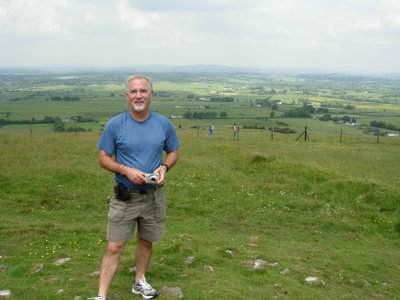
Doug Bland: I’ve been reading some writing by David James Duncan, author of The River Why. He says that environmentalists have taken the wrong approach to preservation and protection of the land. We think that people will be convinced with “facts” so we do environmental impact statements on land and we are sure that people will be convinced to care for the place and protect it. But, he says, people are never convinced by facts, they are convinced by compelling stories. One way to help people to value places is by visiting them in person. The problem is that we sometimes, then, love places to death. Another way to help people love a place is by telling the stories about them. I think the environmental impact of storytelling is both less (in a negative sense) and more (in a positive sense). (In response to “Introduction” in Eithne Massey’s Legendary Ireland) Below is Doug at Loughcrew, one of those places in imminent danger of being loved to death.

Leave a Reply